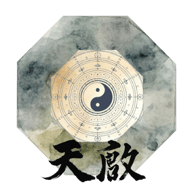
The configuration sits opposite the Property palace (田宅宮) on the Children–Property (子女–田宅線), with the trine reading drawing in Children, Friends, Parents, Property. Tian Xiang does not undergo the Four Transformations directly; reading depends on what shares or faces the palace.
The practitioner’s note: Tian Xiang’s process orientation expresses through children and creative output as a register that governs what the chart-holder produces and passes on to a next generation.
The textbook reading: chart-holders relate to children and creative output through prime minister — second-in-command, ceremonial mediator. Common signatures include senior counsel, diplomats, board members, religious leaders, second-in-command operators. Tian Xiang’s characteristic risk — under-delivery when sat alone — the deputy needs someone to deputise for — surfaces specifically through children and creative output when supporting conditions are absent. Pairings with Zi Wei reinforce this picture; pairings with the Four Killings (擎羊, 陀羅, 火星, 鈴星) sharing or opposing the palace can flip it.
The four layers a practitioner-grade reading examines but this reference does not develop: which auxiliary stars (左輔, 右弼, 文昌, 文曲, 天魁, 天鉞) share or oppose the palace, whether any of the Four Killings (擎羊, 陀羅, 火星, 鈴星) sit in the same or opposing palace, whether self-transformations (自化) on adjacent palaces alter the configuration’s energy, and how the current 10-year and annual luck cycles activate or suppress what sits in the Children Palace and the opposing Property Palace. Synthesising these layers across a real chart is the practitioner skill the Zi Wei Dou Shu Masterclass teaches.