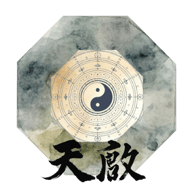
Sitting opposite the Friends palace (僕役宮), this configuration occupies the Siblings–Friends (兄僕線) and reads against the peer-network axis together with the inherited body: Siblings · Health · Property · Friends. Tian Fu does not undergo the Four Transformations directly — sits as structural anchor of the Tian Fu system.
Where Tian Fu sits in 兄弟宮, the register typically reads through how the chart-holder shows up for the people who stand alongside them — though the specific intensity depends heavily on supporting stars.
At textbook level, the configuration tends to produce asset managers, family-office executives, senior administrators, custodial finance roles, with the how the chart-holder shows up for the people who stand alongside them taking on custodial steadiness. Tian Fu’s characteristic risk — wealth that gets defended against repeated tests when killings sit nearby — surfaces specifically through siblings, peers, and business partners when supporting conditions are absent. Pairings with Zi Wei reinforce this picture; pairings with the Four Killings (擎羊, 陀羅, 火星, 鈴星) sharing or opposing the palace can flip it.
Beyond the baseline above, four further dimensions shape a practitioner-grade reading: which auxiliary stars (左輔, 右弼, 文昌, 文曲, 天魁, 天鉞) share or oppose the palace, whether any of the Four Killings (擎羊, 陀羅, 火星, 鈴星) sit in the same or opposing palace, whether self-transformations (自化) on adjacent palaces alter the configuration’s energy, and how the current 10-year and annual luck cycles activate or suppress what sits in the Siblings Palace and the opposing Friends Palace. Synthesising these layers across a real chart is the practitioner skill the Zi Wei Dou Shu Masterclass teaches.