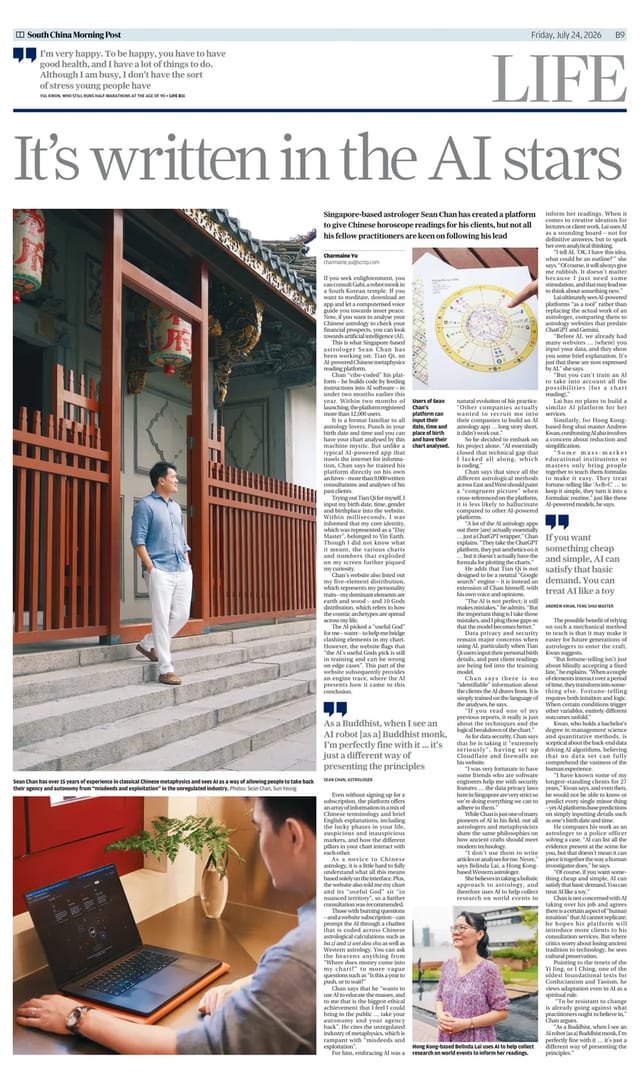
Sitting opposite the Parents palace (父母宮), this configuration occupies the Health–Parents (疾厄–父母線) and reads against the constitutional body together with the inherited line: Siblings · Health · Property · Parents. Tan Lang transforms 化祿 under Wu (戊), 化權 under Ji (己), 化忌 under Gui (癸).
Where Tan Lang sits in 疾厄宮, the register typically reads through recurring health themes and constitutional vulnerabilities (suggestive, not diagnostic) — though the specific intensity depends heavily on supporting stars.
At the textbook level, Tan Lang in the Health Palace reads as appetite — primary peach blossom (主桃花), charisma engine bringing its register to physical body and constitution. F&B founders, entertainers, marketers, property developers, anyone whose work depends on attraction are common manifestations. Tan Lang’s characteristic risk — over-extension, romantic scandal, addictive patterns under Gui (癸) 化忌 — surfaces specifically through physical body and constitution when supporting conditions are absent. Pairings with Wu Qu reinforce this picture; pairings with the Four Killings (擎羊, 陀羅, 火星, 鈴星) sharing or opposing the palace can flip it.
The four layers a practitioner-grade reading examines but this reference does not develop: which auxiliary stars (左輔, 右弼, 文昌, 文曲, 天魁, 天鉞) share or oppose the palace, whether any of the Four Killings (擎羊, 陀羅, 火星, 鈴星) sit in the same or opposing palace, whether self-transformations (自化) on adjacent palaces alter the configuration’s energy, and how the current 10-year and annual luck cycles activate or suppress what sits in the Health Palace and the opposing Parents Palace. Synthesising these layers across a real chart is the practitioner skill the Zi Wei Dou Shu Masterclass teaches.