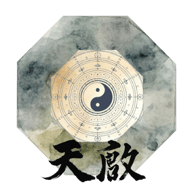
The configuration sits opposite the Self palace (命宮) on the Self–Travel (命遷線), with the trine reading drawing in Spouse, Travel, Fortune, Self. Lian Zhen transforms 化祿 under Jia (甲) and 化忌 under Bing (丙).
The practitioner’s note: Lian Zhen’s romantic intensity expresses through travel and public reception as a register that describes how the world receives the chart-holder when they leave their default context.
At the textbook level, Lian Zhen in the Travel Palace reads as principled-yet-passionate star — the ‘second peach blossom’ bringing its register to travel and public reception. Lawyers, judges, civil servants — or, in difficult configurations, romantic complication patterns are common manifestations. Lian Zhen’s characteristic risk — romantic complication, gambling, blood-related health concerns under Bing (丙) 化忌 — surfaces specifically through travel and public reception when supporting conditions are absent. Pairings with Tian Fu reinforce this picture; pairings with the Four Killings (擎羊, 陀羅, 火星, 鈴星) sharing or opposing the palace can flip it.
At depth, practitioners read four additional layers beyond this baseline: which auxiliary stars (左輔, 右弼, 文昌, 文曲, 天魁, 天鉞) share or oppose the palace, whether any of the Four Killings (擎羊, 陀羅, 火星, 鈴星) sit in the same or opposing palace, whether self-transformations (自化) on adjacent palaces alter the configuration’s energy, and how the current 10-year and annual luck cycles activate or suppress what sits in the Travel Palace and the opposing Self Palace. Synthesising these layers across a real chart is the practitioner skill the Zi Wei Dou Shu Masterclass teaches.