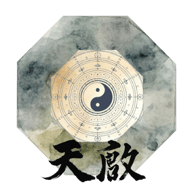
癸未 is the 20th combination in the 60 Jiazi (六十甲子) sexagenary cycle, pairing the Heavenly Stem 癸 (Yin Water) with the Earthly Branch 未 (the Goat). Each Jiazi carries a fixed elemental character and reads differently depending on where it sits in a BaZi chart and what Day Master it is being interpreted against.
癸未 (Yin Water Goat) summary: position 20 of 60 in the sexagenary cycle. Heavenly Stem 癸 = Yin Water. Earthly Branch 未 = Goat, primary element Earth. Hidden stems: 己 (Yin Earth), 丁 (Yin Fire), 乙 (Yin Wood). Stem-on-branch relationship from the stem’s perspective: officer (branch controls stem).
About 癸未 (Yin Water Goat)
In the 60 Jiazi sexagenary cycle, 癸未 (Yin Water Goat) sits at position 20 of 60. It pairs the Heavenly Stem 癸 — the Yin expression of Water, covered in depth in the Yin Water Day Master entry — with the Earthly Branch 未 (the Goat), whose primary element is Earth and which secondarily holds the hidden stems 己 (Yin Earth), 丁 (Yin Fire), 乙 (Yin Wood).
The classical character of any Jiazi comes from two structural questions: what relationship the branch element has to the stem element above it, and whether the stem has a “root” in any of the branch’s hidden stems. Both are deterministic and apply consistently wherever this Jiazi appears in a chart — Year, Month, Day, or Hour pillar — though the practical implication shifts with position.
How 癸 sits on 未
The branch’s element controls the stem. From 癸’s perspective, 未 represents the officer (官) or seven killings (七殺) — an authority pressing on the stem from below. 癸未 demands discipline and structure: the stem must withstand or transform the pressure. Whether this produces achievement or stress depends on whether the stem has support elsewhere in the chart.
癸 is unrooted in this Jiazi: none of the hidden stems in 未 share Water, so the visible stem floats on a foreign element. The stem’s strength comes from elsewhere in the chart (other pillars carrying Water); without that support, the stem is read as “weak” or unstable.
Hidden stems within 未
未 carries 己 (Yin Earth), 丁 (Yin Fire), 乙 (Yin Wood) as hidden stems. In BaZi these are latent influences: they only surface when the rest of the chart triggers them — through combinations involving 未, through clashes that crack open the branch, or through transformations during specific Luck Pillars.
From 癸’s perspective, the hidden stems represent the following Ten God relationships: 己 as 七殺 Seven Killings; 丁 as 偏財 Indirect Wealth; 乙 as 食神 Eating God. These determine what kinds of opportunity, pressure, or support emerge from 未 when it is activated.
Nayin classification: 杨柳木 (Willow Wood)
In the classical Nayin (納音) system, every pair of consecutive Jiazis maps to one of 30 named “sounding elements” — an alternative elemental classification used alongside the standard Five Phases. 癸未 is classified as 杨柳木 (Yáng liǔ mù, “Willow Wood”), with an underlying element of Wood.
Nayin is read as a poetic, descriptive layer rather than a structural one: the imagery of the name (“Willow Wood”) implies how the Jiazi’s elemental quality manifests in practice. 癸未 shares its Nayin with one other Jiazi: 壬午 (Yang Water Horse). Together, this pair forms the 杨柳木 Nayin set.
Combinations & clashes for 未
Every Earthly Branch has exactly one combination partner (六合) and one clash partner (六沖). When a chart contains both members of a pair, the relationship transforms or destabilises that pillar. 未’s pairings:
In BaZi, the twelve Earthly Branches form four 3-Harmony groups (三合): trios that, when all three branches appear together in a chart, combine to produce a single elemental phase. 未 belongs to the 亥+卯+未 group, which combines into Wood. The other two branches in this group are 亥 and 卯.
When 未 appears with both partner branches, the resulting elemental transformation can dominate the chart’s reading. Even a partial harmony (two of the three branches) creates a noticeable pull toward Wood. Other Jiazis carrying the partner branches: 丁卯, 乙亥, 己卯, 丁亥, 辛卯, 己亥, 癸卯, 辛亥, 乙卯, 癸亥.
Direction set: Summer (巳+午+未)
The four direction sets (三會) group the twelve Earthly Branches by season and cardinal direction: 未 belongs to 巳+午+未 — the Summer group, associated with South and the Fire element.
Direction sets carry a “seasonal weight” that complements the 3-Harmony grouping. Where 3-Harmony combines distant branches into one element, direction sets combine three sequential branches representing the early/middle/late phase of one season. Other Jiazis sharing this direction set: 己巳, 庚午, 辛巳, 壬午, 癸巳, 甲午, 乙巳, 丙午, 丁巳, 戊午.
How 癸未’s Year Stem reads against each Day Master
When 癸未 sits at the Year Pillar, its stem (癸) takes on a different Ten God meaning depending on the chart owner’s Day Master. Each row below is computed deterministically from the elemental and polarity relationship.
The 60 Jiazi cycle repeats every 60 years, so 癸未 appears at fixed intervals. Within the 1900–2030 reference range, the years carrying 癸未 are below. Each links to a full reference page for that calendar year.
癸未 is the 20th of 60 stem-branch combinations in the Chinese sexagenary cycle. It pairs the Heavenly Stem 癸 with the Earthly Branch 未 (Goat). The cycle repeats every 60 years, so years carrying 癸未 appear at fixed intervals.
What years are 癸未 years?
Within 1900–2030, the years carrying 癸未 are: 1943, 2003. Each is exactly 60 years apart. For example, someone born in 1943 and someone born in 2003 share the same Year Pillar (癸未) but lead different lives shaped by their individual Day Pillars and Luck Pillars.
Is 癸未 a good Jiazi?
BaZi doesn’t classify Jiazis as universally good or bad. 癸未 carries a specific elemental and structural character (officer (branch controls stem)) that reads as helpful for some Day Masters and challenging for others. Whether it’s welcome in a particular chart depends on that chart’s overall composition and what elements the Day Master needs.
What is the difference between Jiazi and Day Master?
Day Master refers specifically to the Heavenly Stem in the Day Pillar — one of four stems in a chart. Jiazi refers to the entire stem-branch pair in any pillar (Year, Month, Day, or Hour). When 癸未 appears at the Day Pillar, the 癸 stem becomes that person’s Day Master; in any other pillar, 癸未 is read as a contextual influence around the Day Master.
Further reading from the blog
Selected posts from Master Sean Chan’s blog that cover this topic or closely related ones in practice:
癸未’s meaning depends entirely on which pillar it occupies in your chart and how it interacts with the other three pillars. Book a one-on-one BaZi consultation with Master Sean Chan ($588–$788) for a rigorous, personalised analysis.
The BaZi Calculator takes your full birth details (solar-time corrected) and surfaces all four Jiazi pillars — Year, Month, Day, and Hour — along with the Ten Gods and auxiliary stars derived from your Day Master.
The BaZi Bootcamp at Sean Chan’s Academy of Astrology takes you from beginner to confident chart reader — structured lessons, exercises, and live community.
Not one system, but three. Tian Qi reads your chart across BaZi, Zi Wei Dou Shu, and Qi Men Dun Jia at once, then cross-checks every engine, so your answer is verified and layered. Master-level clarity in minutes.
A true tri-engine mind that checks its own analysis across all three systems
Your BaZi Four Pillars decoded: day master, ten gods, and the forces shaping your life
Zi Wei read palace by palace, and Qi Men to time your biggest decisions
One AI reading your chart across BaZi, Zi Wei Dou Shu, and Qi Men Dun Jia at once. Master-level clarity in minutes.