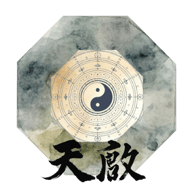
斗 — Dǒu, the Dipper, is mansion 8 of 28 in the classical lunar-mansion cycle and one of the seven mansions of the Black Tortoise (玄武) quadrant. The Dipper — the granary’s register and measured fortune. Auspicious for business openings and harvests.
斗 Dǒu: classical reading
Dǒu — the Dipper — opens the Black Tortoise’s northern quadrant. The mansion classically presides over the measurement and storage of fortune, the granary, and the formal weighing of resources. Tong Shu doctrine reads Dǒu days as auspicious for harvests, the opening of granaries, and the formal accounting of wealth; particularly favourable for businesses that handle stored value.
Configuration
Mansion:斗 (Dǒu) — the Dipper
Position: 8 of 28
Four Symbol:玄武 Black Tortoise — North, Winter, water element
Animal totem:獬 (Xie (mythical unicorn))
Element: wood
Presiding weekday: Thursday
Classical domain
Dǒu — the Dipper — opens the Black Tortoise’s northern quadrant. The mansion classically presides over the measurement and storage of fortune, the granary, and the formal weighing of resources. Tong Shu doctrine reads Dǒu days as auspicious for harvests, the opening of granaries, and the formal accounting of wealth; particularly favourable for businesses that handle stored value. The mansion’s classical domain encompasses the dipper, the granary, the measurement of fortune.
Auspicious activity register (Tong Shu doctrine)
Classical Tong Shu commentary records Dǒu as broadly favourable for: opening a business, harvests, the storage of wealth, formal accounting, signing of contracts that involve measured exchange.
Cautious activity register
Classical commentary records caution for: speculative ventures, gambling, matters that depend on chance. The cautious register is descriptive of the mansion’s classical reading, not prescriptive of a fixed prohibition — chart-specific reading determines whether the caution applies in a given case.
Black Tortoise context
The Black Tortoise (a tortoise entwined with a serpent) governs the northern quadrant — the winter constellations, the water element, and the register of stillness, longevity, and the deep waters. Its 7 mansions span the structures of the household and storehouse. Dǒu is mansion 1 of the Black Tortoise’s seven, sitting within the broader water-element register of the northern quadrant.
Why the lunar mansion alone is not enough
The Dǒu (斗) mansion is one signal in a complete date-selection reading — not the whole answer. Classical Tong Shu (通書) doctrine layers four inputs into any date selection.
The lunar mansion governing the date. The 28 Mansions cycle through the calendar in a fixed seven-day weekday-coupled rhythm, so each candidate date carries one mansion as its presiding register. This is the input these reference pages describe.
The day’s stem-branch pillar. Every calendar date is also a 60-jiazi day pillar — one of the 60 stem-branch combinations that cycle every 60 days. The day pillar carries its own register, classical activity associations, and clash-or-combination relationships with the chart of whoever the date is for.
The year and month context. The current Tai Sui (太歲, the year god), the month branch, and the running shen sha for the year all modulate the date’s register. A mansion classically auspicious for marriage may be partially neutralised if the date falls in a month that clashes with the bride’s zodiac.
The chart-specific question. The date is being selected for a specific person and a specific event. The combination of mansion + day pillar + year/month context + the person’s own BaZi chart determines whether the date is genuinely auspicious for them. The same date can be excellent for one person and contradicted for another.
This page describes the first input — the Dǒu (斗) mansion's register. The reading is a useful starting reference. It is not a substitute for a chart-aware date selection that layers in the other three. Master Sean Chan’s auspicious date selection reads all four layers against your specific event question.
Practical priorities
Note Dǒu’s classical register — the mansion is classically associated with the dipper, the granary, the measurement of fortune and its activity register reflects this domain.
Read the mansion against the event you are planning. Classical Tong Shu doctrine records Dǒu as favourable for opening a business, harvests and cautious for speculative ventures, gambling.
The mansion is one of four inputs. See the “Why the lunar mansion alone is not enough” section above for the full date-selection calculus that includes the day’s stem-branch pillar, year/month context, and your specific BaZi chart.
What does the 斗 (Dǒu) mansion mean in classical date selection?
Dǒu (斗), the Dipper, is mansion 8 of 28 in the classical lunar-mansion cycle — one of the seven mansions of the Black Tortoise (玄武) quadrant of the night sky. Classical Tong Shu doctrine reads Dǒu as the dipper — the granary’s register and measured fortune. auspicious for business openings and harvests.
What is the Dǒu mansion classically auspicious for?
Classical Tong Shu commentary records Dǒu as favourable for: opening a business, harvests, the storage of wealth, formal accounting, signing of contracts that involve measured exchange. The classical register reflects the mansion’s underlying domain — the dipper, the granary, the measurement of fortune. Note that the lunar mansion is one of four inputs into any complete date-selection reading; chart-specific application requires layering in the day’s stem-branch pillar, the year and month context, and your own BaZi chart.
Should I avoid events on Dǒu mansion days?
Classical commentary records caution for speculative ventures, gambling, matters that depend on chance on Dǒu days, but the caution is descriptive rather than prescriptive. Whether the cautious register actually applies to your specific event depends on the day’s stem-branch pillar, the year/month context, and your own chart. A chart-aware date selection consultation reads all four layers together to determine whether a candidate date is genuinely contraindicated for you.
AUSPICIOUS DATE SELECTION
Get a chart-aware auspicious date for your specific event.
Master Sean Chan’s date selection service reads your specific event against your own BaZi chart, the year and month context, the lunar mansion governing each candidate date, and the shen sha that activate. Zero generic almanac advice — every date is chart-specific.
A BaZi consultation reads your full four-pillar chart and identifies the shen sha that activate around career, relationship, and event-specific questions — the chart-side context that makes any date selection actually meaningful.
For pre-computed auspicious dates by occasion type and month — weddings, ROM, business openings, contract signing, moving house, renovation — see the master index of auspicious dates by month.
Not one system, but three. Tian Qi reads your chart across BaZi, Zi Wei Dou Shu, and Qi Men Dun Jia at once, then cross-checks every engine, so your answer is verified and layered. Master-level clarity in minutes.
A true tri-engine mind that checks its own analysis across all three systems
Your BaZi Four Pillars decoded: day master, ten gods, and the forces shaping your life
Zi Wei read palace by palace, and Qi Men to time your biggest decisions
One AI reading your chart across BaZi, Zi Wei Dou Shu, and Qi Men Dun Jia at once. Master-level clarity in minutes.