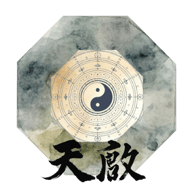
天輔 (Tian Fu, “Heavenly Assistant”) is one of the 9 Stars (九星) of Qi Men Dun Jia, classically associated with the wood element and natively occupying the southeast palace (巽). The scholar-star — 天輔 supports academic success, diplomacy, and formal communication; classically one of the most reliably-favourable stars.
天輔: classical reading and observed register
天輔 (pinyin: Tiān Fǔ) is one of the nine stars that rotate across the QMDJ chart with the dun period. Each star carries a permanent native-palace assignment in the Earth board and a domain of meaning that informs how the consultation should be read when the star lands on a relevant palace.
Classical attributes
Native palace: southeast (巽) — Luo Shu number 4
Element: wood
Tier: very auspicious
Domain: Scholarship, education, diplomacy, written communication, romantic introductions
Positive register (when activated favourably)
Academic success, scholarly recognition, successful examinations, productive diplomatic exchanges, formal communications, romantic introductions, contracts and agreements. The classical attribution emphasises 'helpful' / supportive influence — 天輔 makes the surrounding pattern stronger.
Negative register (when activated unfavourably)
Rare. When 天輔 lands inauspiciously, the register softens to 'help that arrives too late' or 'good intent without execution'. Generally considered one of the most reliably-favourable stars.
When to consult 天輔
Read favourably for scholarship, examinations, contracts, romantic introductions, diplomatic missions, and any consultation involving formal communication or written agreements.
Why generic Tian Fu interpretation fails
The 天輔 register interacts with the gate, spirit, stem, and palace elements that land alongside it in a specific consultation. The same Tian Fu can read very differently when paired with 開門 (Open Gate) at the Northwest palace versus 死門 (Death Gate) at the Southwest palace. Generic per-star descriptions can name the foundational register; chart-aware reading is required to know how it activates for your specific question. Master Sean Chan’s QMDJ forecasting consultation reads the star against your specific question.
Practical priorities
Identify whether 天輔 is landing on a palace relevant to your question in your current consultation. The star’s favourable register activates only when the relevant palace is part of the chart geometry of your question.
Read the surrounding gate / spirit / stem. 天輔’s register is modulated by the other components landing on the same palace.
Book a chart-aware reading via QMDJ forecasting consultation for any high-stakes question (medical, marriage, business launch, legal). Generic per-star reference is no substitute for the consultation itself.
Frequently asked questions
What does 天輔 mean in a Qi Men Dun Jia chart?
The scholar-star — 天輔 supports academic success, diplomacy, and formal communication; classically one of the most reliably-favourable stars. Its classical domain is scholarship, education, diplomacy, written communication, romantic introductions. The star reads favourably.
Where does 天輔 naturally sit in the QMDJ chart?
天輔 natively occupies the southeast palace (巽) — Luo Shu number 4 — in the Earth board. Its rotation across the Heaven board is determined by the dun period, which is part of the chart-casting procedure that classical doctrine treats as practitioner-only.
Should I avoid acting if 天輔 appears in my consultation?
The star reads favourably by default for most consultations, especially those aligned with its domain (scholarship, education, diplomacy, written communication, romantic introductions). However, its actual impact still depends on the surrounding pattern and the palace it lands on. Chart-aware reading completes the read.
QI MEN DUN JIA FORECASTING
Get a chart-aware QMDJ reading for your specific question.
Master Sean Chan’s Qi Men Dun Jia forecasting consultation reads the specific question you bring against the current dun period’s chart. The reading identifies which gates / stars / spirits are activating for your question, what classical patterns are present, and the favourable timing window for your action. Zero generic advice — every consultation is chart-specific.
Master Sean Chan’s free Qi Men Dun Jia calculator plots the current chart for any time of day. Use it to see the current dun period’s gate / star / spirit / stem distribution across the nine palaces — useful for self-study, but no substitute for chart-aware reading of a specific question.
Master Sean Chan’s QMDJ Bootcamp takes you from beginner through intermediate — chart casting from date and time, the dun-period mechanism, the heaven/earth board rotation, and how to read the 9 stars / 8 gates / 8 spirits / 9 palaces / 9 stems for actual consultation questions. The bootcamp teaches the methodology these reference pages deliberately omit, so you can read charts for yourself.
Not one system, but three. Tian Qi reads your chart across BaZi, Zi Wei Dou Shu, and Qi Men Dun Jia at once, then cross-checks every engine, so your answer is verified and layered. Master-level clarity in minutes.
A true tri-engine mind that checks its own analysis across all three systems
Your BaZi Four Pillars decoded: day master, ten gods, and the forces shaping your life
Zi Wei read palace by palace, and Qi Men to time your biggest decisions
One AI reading your chart across BaZi, Zi Wei Dou Shu, and Qi Men Dun Jia at once. Master-level clarity in minutes.