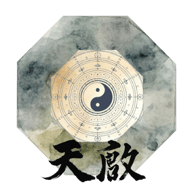
龍遁 (Dragon Evasion, Lóng Dùn) is one of the classical formations (格局) of Qi Men Dun Jia — named combinations that classical doctrine recognises as carrying auspicious register. Dragon Evasion — a classical evasion formation aligning the Sun Wonder with water; supports flowing escape from difficult circumstances.
龍遁: classical formation reading
What this formation is
One of the six classical 'evasion' (遁) formations — patterns that allow the consultant to escape unfavourable circumstances by aligning with elemental flow. Dragon Evasion specifically aligns the Sun Wonder with water-element palaces, classically read as the consultant 'flowing like a dragon through water' to escape a difficult situation.
Components
乙 (Sun Wonder) on a water-palace (typically Kan north or 壬 stem palace) with a favourable gate
Tier and reading
Classical doctrine reads this formation as auspicious. When this formation is present in a chart, classical interpretation reads it as a strong supportive signal — actions aligned with the formation's domain receive amplified favourable register.
Why generic formation lookup fails
Classical formations are recognised by their component combinations, but the same formation can be present in a chart and not relevant to a specific consultation if it doesn't land on the question's relevant palace. Identifying when a formation is activating for your question (rather than just present somewhere in the chart) is the work of chart-aware reading. Master Sean Chan’s QMDJ forecasting consultation reads activated formations in your specific chart.
Practical priorities
Identify whether 龍遁 is activating for your question. The formation may be present in the chart but not relevant if it doesn't land on the palace your consultation is asking about.
Read the formation alongside the surrounding pattern. Other components on the activated palace can amplify or modulate the formation's favourable register.
Dragon Evasion — a classical evasion formation aligning the Sun Wonder with water; supports flowing escape from difficult circumstances. One of the six classical 'evasion' (遁) formations — patterns that allow the consultant to escape unfavourable circumstances by aligning with elemental flow.
Is 龍遁 always auspicious?
The formation's tier is consistent under classical doctrine, but its actual impact depends on which palace it's activating on, what surrounding components share the activated palace, and what the consultation question is about. Chart-aware reading is required to know whether the formation's appearance is decisive for your specific question.
How rare is this formation?
Classical formations have specific component combinations that arise from particular dun-period configurations. Some formations appear regularly across days; others appear only in narrow time windows. The frequency of any specific formation in your charts depends on the chart-casting period and direction of your typical consultation.
QI MEN DUN JIA FORECASTING
Get a chart-aware QMDJ reading for your specific question.
Master Sean Chan’s Qi Men Dun Jia forecasting consultation reads the specific question you bring against the current dun period’s chart. The reading identifies which gates / stars / spirits are activating for your question, what classical patterns are present, and the favourable timing window for your action. Zero generic advice — every consultation is chart-specific.
Master Sean Chan’s free Qi Men Dun Jia calculator plots the current chart for any time of day. Use it to see the current dun period’s gate / star / spirit / stem distribution across the nine palaces — useful for self-study, but no substitute for chart-aware reading of a specific question.
Master Sean Chan’s QMDJ Bootcamp takes you from beginner through intermediate — chart casting from date and time, the dun-period mechanism, the heaven/earth board rotation, and how to read the 9 stars / 8 gates / 8 spirits / 9 palaces / 9 stems for actual consultation questions. The bootcamp teaches the methodology these reference pages deliberately omit, so you can read charts for yourself.
Not one system, but three. Tian Qi reads your chart across BaZi, Zi Wei Dou Shu, and Qi Men Dun Jia at once, then cross-checks every engine, so your answer is verified and layered. Master-level clarity in minutes.
A true tri-engine mind that checks its own analysis across all three systems
Your BaZi Four Pillars decoded: day master, ten gods, and the forces shaping your life
Zi Wei read palace by palace, and Qi Men to time your biggest decisions
One AI reading your chart across BaZi, Zi Wei Dou Shu, and Qi Men Dun Jia at once. Master-level clarity in minutes.