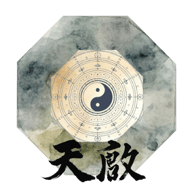
Hexagram 46 (升, Shēng) is one of the 64 classical I Ching hexagrams. Wilhelm’s English translation renders the hexagram’s name as “Pushing Upward”. This page describes how classical commentary reads this hexagram when received in answer to a decision question.
“Pushing Upward has supreme success. One must see the great person. Fear not. Departure toward the south brings good fortune.”
— classical judgment text
“Within the earth, wood grows: the image of Pushing Upward. Thus the noble person of devoted character heaps up small things in order to achieve something high and great.”
— classical image text
The hexagram’s general theme
Slow steady ascent — wood growing through earth. Don't worry about fast results; small accumulations become great heights.
Classical keywords: steady rise, ascending, compounding small wins, patient promotion, tree growing.
升 Shēng read for decision questions
Classical I Ching commentary reads decision questions through the hexagram’s register of timing, alignment, and the relationship between proposed action and surrounding conditions. The hexagram describes the field of forces around the decision; classical doctrine reads whether the moment favours proceeding, waiting, reframing the question, or pivoting to a different option entirely.
The hexagram’s register does not have explicit decision-domain resonances in its modern interpretive keys, but applies to decision questions through its general theme described above.
Classical guidance for the hexagram: Push upward step by step. Heap up small things. See the great person — but don't worry about the timing. Don't stop, even in dark.
Read against a decision question, this guidance describes the field of forces around the hexagram’s register of timing, alignment, and the relationship between proposed action and surrounding conditions. the hexagram describes the field of forces around the decision; classical doctrine reads whether the moment favours proceeding, waiting, reframing the question, or pivoting to a different option entirely.. The action the guidance suggests — or warns against — applies to the decision question being asked, with the chart-specific qualifications that consultation provides.
Configuration
- Hexagram: #46 升 (Shēng), “Pushing Upward”
- Question type: Decision (決策)
- Question domain: Binary choices, multi-option decisions, timing of action, whether-to-proceed questions
- Upper trigram: kun · Lower trigram: xun
- Hexagram lines (top to bottom):
000110(1 = yang / solid, 0 = yin / broken)
Why a generic hexagram-for-decision interpretation falls short
This page describes what classical commentary reads when Hexagram 46 is received for a decision question — the hexagram’s general register applied to the decision domain. But a complete I Ching reading for a specific question requires the casting method (yarrow vs three-coin), identification of changing lines, the resulting secondary hexagram, and integration with the querent’s specific BaZi chart. Without those, the reading is reference-level — the broad register, not the chart-specific application. For chart-aware reading on a specific high-stakes decision, book a BaZi consultation. The four-pillar chart layered with the I Ching reading and the timing analysis produces decision-level diagnostic depth.