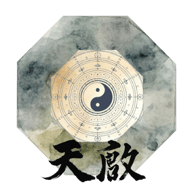
The 64 classical I Ching hexagrams read across the 4 most common question domains: career, relationships, decision, and health. 256 hexagram-question-type cells describe what classical commentary reads when a specific hexagram is received in answer to a specific kind of question.
The 4 question-type lenses on the 64 hexagrams
This is the master directory for the I Ching Hexagrams by Question Type reference. The 64 classical I Ching hexagrams describe specific fields of forces; classical commentary tradition applies the hexagrams to specific question domains differently — the same hexagram read for a career question and a health question produces related but distinct reads.
Voice constraint: these pages describe what classical commentary reads when a specific hexagram is received for a specific kind of question. They do not teach the casting procedure (yarrow stalk vs three-coin), how to identify changing lines, how to derive the secondary hexagram, or how to integrate the reading with the querent’s BaZi chart. For chart-aware reading on a specific question, book a BaZi consultation; for the general 64-hexagram reference (without question-type framing), see the I Ching hexagrams hub.
⚠️ Why an I Ching reading alone is not enough
A complete classical I Ching reading layers four inputs together; the hexagram and its question-type lens is only the second:
The casting method and quality of the question. Yarrow vs three-coin; vague vs precisely framed questions.
The hexagram and its question-type register. What this directory describes.
Changing lines and the secondary hexagram (之卦). The lines that move and the hexagram they produce.
The querent’s BaZi chart. The chart-side input that situates the reading in the querent’s specific position.
Use this directory as the hexagram-question-type reference layer. The complete reading requires casting, line analysis, and chart integration — the chart-aware skill that consultation provides.
The 4 question types
Click any question-type sub-hub to see all 64 hexagrams read in that question’s context.
Identify the hexagram. Which of the 64 hexagrams was received? (Casting is the chart-aware skill the consultation provides; if you don’t have a hexagram cast yet, the reference describes the registers in general.)
Identify the question type. Career, relationship, decision, or health.
Look up the cell page. Hexagram N for {question type} — describes the hexagram’s register applied to the question domain.
Apply the locked “four inputs” framework. The hexagram-question-type read is one input of four. The complete reading also requires the casting method and question framing, the changing lines and secondary hexagram, and the querent’s BaZi chart.
Book a chart-aware consultation via BaZi consultation to combine all four inputs for an actual reading.
Frequently asked questions
What does it mean to read the I Ching by question type?
Classical I Ching practice recognises that the same hexagram applies differently to different kinds of questions. A hexagram received in answer to “Should I take this job?” carries the same general register as the same hexagram received in answer to “Will this relationship work?”, but the specific reading shifts to apply the hexagram’s field of forces to the question’s domain. This reference indexes the 64 hexagrams across the four most common question types — career, relationships, decision, and health — producing 256 question-specific readings.
Can I substitute these reference pages for an actual I Ching reading?
No. These pages describe what classical commentary reads when a hexagram is received for a question type, at the reference level. A complete I Ching reading requires (a) actually casting the hexagram for your specific question, (b) identifying which lines have changed, (c) deriving the secondary hexagram (之卦) from the changing lines, and (d) integrating the reading with the querent’s BaZi chart. The reference page is one input of four; the full reading is the chart-aware skill that a consultation provides.
Why are there only 4 question types? What about others?
Career, relationships, decision, and health cover the four most common life-domain questions classical I Ching practice handles. Other question types — financial, legal, travel, family, spiritual — can usually be reframed as one of the four (e.g., a major financial decision is a “decision” question; a family conflict is a “relationships” question; a serious illness diagnosis is a “health” question). For questions that don’t map cleanly, a chart-aware consultation handles the question-framing as part of the reading.
What is the relationship between this reference and the general 64-hexagram reference?
The general 64 hexagrams reference covers each hexagram’s classical judgment, image, line statements, and the relationships between paired and inverse hexagrams — the foundational reference for the hexagram regardless of question. This question-type reference layers a question-specific lens on top of each hexagram’s general register, producing 64 × 4 = 256 question-specific readings. The two references are complementary: use the general reference for hexagram-level reading, this reference for question-specific application.
BAZI 1:1 CONSULTATION
Get a chart-aware reading for your specific question.
Master Sean Chan’s BaZi consultation reads your full four-pillar chart, layered with the I Ching reading and timing analysis. Where the I Ching reading describes the field of forces around your question, the BaZi chart describes your specific position within that field. Together they produce diagnostic depth that either alone cannot.
The full I Ching hexagrams reference covers all 64 hexagrams with classical judgment, image, line statements, and the relationships between paired and inverse hexagrams — the foundational reference for the question-specific reads on this page.
Not one system, but three. Tian Qi reads your chart across BaZi, Zi Wei Dou Shu, and Qi Men Dun Jia at once, then cross-checks every engine, so your answer is verified and layered. Master-level clarity in minutes.
A true tri-engine mind that checks its own analysis across all three systems
Your BaZi Four Pillars decoded: day master, ten gods, and the forces shaping your life
Zi Wei read palace by palace, and Qi Men to time your biggest decisions
One AI reading your chart across BaZi, Zi Wei Dou Shu, and Qi Men Dun Jia at once. Master-level clarity in minutes.