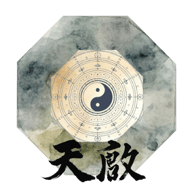
The Monkey (申) is one of the twelve Earthly Branches in classical Chinese metaphysics. Its primary element is Yang Metal, it occupies the 15:00–17:00 hour window, and it carries the seasonal flavour of Early autumn (compass WSW).
Monkey (申) summary: Yang Metal Earthly Branch, hour window 15:00–17:00, season Early autumn, direction WSW. Hidden stems: 庚 (Yang Metal), 壬 (Yang Water), 戊 (Yang Earth). Combination partner: 巳 (combines into Water). Clash partner: 寅. 3-Harmony: 申+子+辰 → Water.
About the Monkey Branch (申)
In BaZi (and classical Chinese astronomy more broadly), the twelve Earthly Branches (地支) are the second axis of the calendrical system — alongside the ten Heavenly Stems (天干). Each branch represents a particular phase in the seasonal cycle, a 2-hour window of the day, a compass direction, a Chinese zodiac animal, and (most importantly for chart-reading) a specific elemental composition.
The Monkey (申) sits at the Early autumn position in the cycle, anchored to the WSW compass direction and the 15:00–17:00 hour window. Its primary (本气) element is Yang Metal, and it carries a specific set of hidden stems that activate under chart-specific conditions. Where it appears in your chart — Year, Month, Day, or Hour pillar — determines what aspect of life it influences.
The Monkey in the Chinese zodiac
The Monkey is the ninth zodiac animal — clever, versatile, and quick-witted. As the 申 branch, it marks early autumn when Metal energy first asserts itself and Water is stirring beneath. The Monkey archetype is read as inventive and structurally active.
Hidden stems within 申
申 carries the following hidden stems (人元): 庚 (Yang Metal), 壬 (Yang Water), 戊 (Yang Earth). The first stem listed is the “main qi” (本气) — the primary elemental influence that aligns with the branch’s overall character. The remaining stems are secondary influences (中气 and 余气) that surface under specific conditions: when combinations involving 申 occur, when 申 clashes with another branch, or when transformations during specific Luck Pillars activate them.
Reading 申 in a chart means accounting not only for its visible primary element (Metal) but also for what its hidden stems represent in relation to the chart’s Day Master. The same 申 can read very differently depending on which Day Master sits above it.
Combinations & clashes for 申
申 has fixed pairings with two other Earthly Branches:
Combination (六合): 申 + 巳 → combines into Water. When both branches appear together in a chart, the resulting transformation can dominate the related pillar’s reading.
Clash (六沖): 申 ↔ 寅. When both appear, they oppose each other elementally and the related pillar destabilises — in BaZi practice, this is read as life events of disruption, change, or movement.
3-Harmony group: 申+子+辰 → Water
申 belongs to the 申+子+辰 3-Harmony group, which combines into Water. The other two branches in this group are 子 and 辰. When all three appear in a chart together, the elemental transformation can dominate the chart’s overall reading; even partial harmony (any two of the three) creates a noticeable elemental pull toward Water.
Direction set: Autumn (申+酉+戌)
申 also belongs to the Autumn direction set (申+酉+戌) — three sequential branches representing the early, middle, and late phase of the Autumn season, anchored to the West compass direction and carrying the Metal elemental flavour. The other two branches in this set are 酉 and 戌.
Jiazis carrying 申
Each Earthly Branch appears in exactly 5 of the 60 Jiazi (六十甲子) combinations. The Jiazis carrying 申 are listed below, each linking to a detailed reference page covering the stem-branch pairing analysis, hidden stems interaction, Nayin classification, and Ten God relationships against each Day Master.
What does it mean if I was born in the Year of the Monkey?
Your BaZi chart’s Year Pillar contains 申 as the Earthly Branch. 申 contributes its elemental flavour (Metal) and its zodiac dynamics to the year pillar’s overall reading. But the Year Pillar is only one of four pillars in your chart — your Day Master (the Heavenly Stem in the Day Pillar) is what most readings rotate around. Run the BaZi Calculator for your full chart.
What hour is 申 in BaZi?
申 corresponds to the 15:00–17:00 hour window. If you were born in this 2-hour range, your Hour Pillar carries 申 as its branch. The Hour Pillar is the most personal of the four pillars and is often associated with later-life themes and one’s offspring or creative output in classical interpretation.
Which years are the Year of the Monkey?
Years of the Monkey appear every 12 years. Within 1900–2030 see the “Years of the Monkey” section above for the complete list. Note that BaZi years run from Li Chun (立春, around February 4) to the next Li Chun — not from the Western calendar year boundary or the Lunar New Year. Births in late January or early February of a given year may belong to the previous BaZi year.
What clashes with 申?
申 has exactly one clash partner: 寅. When both branches appear together in a chart, they oppose each other elementally, and the pillar containing the clashed branches is read as destabilised. In practice, this is often associated with life events of change, movement, or rupture — though the actual outcome depends entirely on the rest of the chart.
Further reading from the blog
Selected posts from Master Sean Chan’s blog that cover this topic or closely related ones in practice:
申’s reading depends entirely on which pillar it occupies in your chart and what your Day Master is. Book a one-on-one BaZi consultation with Master Sean Chan ($588–$788) for a rigorous, personalised analysis.
The BaZi Calculator takes your full birth details (solar-time corrected) and surfaces all four pillars — Year, Month, Day, and Hour — including which Earthly Branches sit in each.
The BaZi Bootcamp at Sean Chan’s Academy of Astrology takes you from beginner to confident chart reader — structured lessons, exercises, and live community.
Not one system, but three. Tian Qi reads your chart across BaZi, Zi Wei Dou Shu, and Qi Men Dun Jia at once, then cross-checks every engine, so your answer is verified and layered. Master-level clarity in minutes.
A true tri-engine mind that checks its own analysis across all three systems
Your BaZi Four Pillars decoded: day master, ten gods, and the forces shaping your life
Zi Wei read palace by palace, and Qi Men to time your biggest decisions
One AI reading your chart across BaZi, Zi Wei Dou Shu, and Qi Men Dun Jia at once. Master-level clarity in minutes.