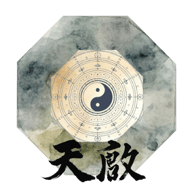
Hexagram #28, 大過 Dà Guò — Preponderance of the Great — pairs the upper trigram of Lake (兌) over the lower trigram of Wind (巽). The roof beam is buckling under the weight — extraordinary times demand extraordinary action. Stand alone if you must; renounce the world if needed.
Decision quality
Have somewhere to go. Reinforce or replace. Be willing to act alone in an emergency — even at personal cost.
What this hexagram means
The upper trigram is Lake (兌), ☱ — joyous, open. The lower trigram is Wind (巽), ☴ — gentle, penetrating. The interplay of these two forces, with the upper sitting above the lower, is what gives this hexagram its character.
The classical Chinese name 大過 (Dà Guò) carries the connotations that the King Wen sequence assigned to position #28 in the order of change: The roof beam is buckling under the weight — extraordinary times demand extraordinary action. Stand alone if you must; renounce the world if needed.
This hexagram is also rendered in English as Great Excess, Great Surpassing, Critical Mass — different translators emphasise different facets of its meaning.
What follows on this page is the full classical reading: the Judgment attributed to King Wen, the Image attributed to the Duke of Zhou, all six line texts, and the three derived hexagrams (互卦, 錯卦, 綜卦) that classical practitioners always read alongside the primary one. The page closes with a contemporary application section — how the configuration tends to land in modern decisions.
The Judgment (彖辭)
大過:棟橈,利有攸往,亨。
Preponderance of the Great. The ridgepole sags to the breaking point. It furthers one to have somewhere to go. Success.
The Judgment (彖辭) is the line attributed to King Wen, written while he was imprisoned by the last Shang ruler. It states the configuration’s essential character and indicates the favorable or unfavorable trajectory of the situation. For 大過, it sets the time-quality of the moment: The roof beam is buckling under the weight — extraordinary times demand extraordinary action. Stand alone if you must; renounce the world if needed.
The decision quality the judgment recommends here is direct: Have somewhere to go. Reinforce or replace. Be willing to act alone in an emergency — even at personal cost.
The Image (大象傳)
澤滅木,大過。君子以獨立不懼,遯世无悶。
The lake rises above the trees: the image of Preponderance of the Great. Thus the noble person, when they stand alone, is unconcerned, and if they have to renounce the world, they are undaunted.
The Image (大象傳, “Greater Image”) is the second classical layer, attributed to the Duke of Zhou. It takes the natural picture suggested by the two trigrams — lake (兌, ☱) above wind (巽, ☴) — and uses it to describe how the noble person (君子) responds. Image readings are a guide to right conduct: not what will happen, but what one ought to do.
For hexagram #28, the image points to a specific style of inner posture appropriate to this configuration. The classical formulation should be read as a behavioral instruction, not as a metaphor.
The six lines (爻辭)
Each hexagram has six lines (爻), counted from the bottom up. When you cast the I Ching using the traditional yarrow-stalk or three-coin method, certain lines emerge as “changing lines” — these are the ones whose line text (爻辭) speaks directly to your question. Below are all six line texts for hexagram 28 in classical Chinese with English rendering. If your reading produced a changing line, the relevant text is the one whose position matches.
Line position carries its own structural meaning: lines 2 and 5 are the “central” positions of their respective trigrams (and line 5 is the ruler’s position). Yang lines in odd positions and yin lines in even positions are “correct”; mismatches indicate friction.
First line · Bottom (Initial)
初六:藉用白茅,无咎。
Initial Six: To spread white rushes underneath. No blame.
Spread white rushes underneath. No blame. Extreme caution at the start of an extraordinary undertaking.
Second line · Second
九二:枯楊生稊,老夫得其女妻,无不利。
Nine in the Second: A dry poplar sprouts at the root. An older man takes a young wife. Everything furthers.
A dry poplar sprouts at the root; an older man takes a young wife. Everything furthers. Unlikely combinations bringing renewal.
Third line · Third
九三:棟橈,凶。
Nine in the Third: The ridgepole sags to the breaking point. Misfortune.
The ridgepole sags to the breaking point. Misfortune. Forcing too much through a structure that cannot hold it.
Fourth line · Fourth
九四:棟隆,吉,有它吝。
Nine in the Fourth: The ridgepole is braced. Good fortune. If there are ulterior motives, it is humiliating.
The ridgepole is braced. Good fortune. If ulterior motives, humiliation. Reinforce at the right moment, but only with clean intent.
Fifth line · Fifth (Ruler)
九五:枯楊生華,老婦得其士夫,无咎无譽。
Nine in the Fifth: A dry poplar puts forth flowers. An older woman takes a husband. No blame. No praise.
A dry poplar puts forth flowers; an older woman takes a husband. No blame, no praise. Late renewal that is technically correct but emotionally hollow.
Sixth line · Top
上六:過涉滅頂,凶,无咎。
Top Six: One must go through the water. It goes over one's head. Misfortune. No blame.
One must go through the water; it goes over one's head. Misfortune; no blame. Some sacrifices are required by extraordinary times — the cost is real but not blameworthy.
互卦 (Nuclear Hexagram) — the inner pattern
Whichever hexagram you cast, classical practice does not stop at the surface. The next thing you read is the 互卦 (hù guà) — the nuclear or mutual hexagram. Below is what it is for 大過 Dà Guò, and how to read its meaning.
The 互卦 (Nuclear hexagram, sometimes also called the “mutual” or “inner” hexagram) is constructed from the inner four lines (lines 2, 3, 4, and 5) of the primary hexagram. Lines 2-3-4 form the new lower trigram; lines 3-4-5 form the new upper trigram. What it shows is the inner pattern of the situation — the structural undercurrent beneath the surface configuration.
The nuclear hexagram of 大過 Dà Guò is hexagram #1, 乾 Qián — The Creative. Pure creative force. The yang principle in its undiluted, generative form — sustained, tireless action that initiates and sets cycles in motion.
What this means in practice: the surface configuration of Preponderance of the Great is being driven, underneath, by the energetics of The Creative. When you act on this hexagram, the inner texture of your situation is shaped by the nuclear — so it is the nuclear, not just the primary, that you must respect.
錯卦 (Inverse Hexagram) — the polar opposite
The second derived reading is the 錯卦 (cuò guà) — the inverse or polar opposite. Every yang line becomes yin and every yin line becomes yang. The result is the configuration that lies on the other side of every choice in the primary.
What you put into the jaws — words, food, ideas — becomes what you are.
The 錯卦 (Inverse, sometimes called “Opposite” or “Crossed”) is constructed by flipping every line of the primary hexagram — every yang becomes yin, every yin becomes yang. It is the hexagram’s polar opposite: the situation that would result if every active force became receptive and every receptive force became active.
The inverse of 大過 Dà Guò is hexagram #27, 頤 Yí — The Corners of the Mouth (Providing Nourishment). What you put into the jaws — words, food, ideas — becomes what you are. Discipline of intake is the discipline of character.
Reading the inverse is how classical practitioners check their interpretation against its mirror. The wisdom of Preponderance of the Great is sharpened by knowing what its absolute negation looks like — The Corners of the Mouth (Providing Nourishment) is the warning, the contrast, or sometimes the secret complement of the primary configuration.
綜卦 (Reverse Hexagram) — the other side of the situation
The third derived reading is the 綜卦 (zōng guà) — the reverse or inverted hexagram. The whole figure is turned upside down. This is how the situation reads from the perspective of the other party, or how the same event would be described looking back from its conclusion.
The roof beam is buckling under the weight — extraordinary times demand extraordinary action.
The 綜卦 (Reverse, sometimes called “Inverted” or “Turned”) is constructed by turning the entire hexagram upside down — line 1 becomes line 6, line 2 becomes line 5, and so on. It is the situation seen from the other side — what the same event looks like to your counterpart, or what the same hexagram becomes when read from the top down rather than the bottom up.
大過 is one of the eight self-reversing hexagrams: when turned upside down, the line pattern is identical to itself. Its 綜卦 is therefore itself — #28, 大過 Dà Guò. (The other seven self-reversing hexagrams are #1 Qian, #2 Kun, #27 Yi, #28 Da Guo, #29 Kan, #30 Li, #61 Zhong Fu, and #62 Xiao Guo.)
Practically, this means the configuration appears the same to both sides of the situation. There is no “other perspective” that disagrees with this one; the symmetry of the lines makes the reading complete on its own. This is why these eight hexagrams carry an unusual structural finality — they describe configurations where shifting perspective will not change the answer.
Modern application
In contemporary practice, hexagram 28 大過 Dà Guò tends to surface in readings around questions of:
bearing too much load
leadership in crisis
founder burnout territory
decisive intervention
The decision-quality recommendation, distilled from the Judgment, the Image, and the line texts together, is: Have somewhere to go. Reinforce or replace. Be willing to act alone in an emergency — even at personal cost.
If you cast this hexagram and want to integrate its reading with your personal chart, the next step is to layer it onto your BaZi (Four Pillars) or Zi Wei Dou Shu profile — the same hexagram lands differently on a Yang Wood day master in a hot summer than it does on a Yin Water day master in winter. The I Ching tells you the shape of the moment; your BaZi tells you the terrain the shape will land on.
Hexagram 28 for career questions
For questions about career — promotions, role changes, business decisions, leaving or staying — hexagram 28 大過 Dà Guò (Preponderance of the Great) describes the time-quality your professional situation is sitting in. The roof beam is buckling under the weight — extraordinary times demand extraordinary action. Stand alone if you must; renounce the world if needed.
The trigram configuration of Lake above Wind (joyous, open over gentle, penetrating) is the lens. Read the upper trigram (Lake) as how your work appears to others — the visible shape of the role, the project, the public face. Read the lower trigram (Wind) as the inner ground you are bringing to it — your competence, motivation, and disposition.
The decision-quality recommendation, distilled from the Judgment, applies directly to career deliberations: Have somewhere to go. Reinforce or replace. Be willing to act alone in an emergency — even at personal cost.
If your reading produced a changing line, the most career-relevant positions are line 5 (the ruler’s seat — how authority is moving above you) and line 2 (the worker’s central position — how your own role is moving). For hexagram 28, line 5 reads: 九五:枯楊生華,老婦得其士夫,无咎无譽。 — Nine in the Fifth: A dry poplar puts forth flowers. An older woman takes a husband. No blame. No praise.
Hexagram 28 for love & relationship questions
For questions about relationships — love, family, friendship, partnerships, conflict — hexagram 28 大過 Dà Guò (Preponderance of the Great) describes the energetic shape between the parties involved, regardless of which side asked the question. The roof beam is buckling under the weight — extraordinary times demand extraordinary action. Stand alone if you must; renounce the world if needed.
Read the configuration as a meeting of two forces: Lake above Wind (joyous, open over gentle, penetrating). The upper trigram (Lake) describes how the situation looks from the outside between you, while the lower trigram (Wind) describes the inner ground each person is bringing to the meeting. Misalignment between the two is often what the cast is pointing at.
The decision-quality recommendation, applied to the relational frame: Have somewhere to go. Reinforce or replace. Be willing to act alone in an emergency — even at personal cost.
If your reading produced changing lines, lines 2 and 5 are the most relationally significant — they are the central positions of the lower and upper trigrams respectively, and classical practice reads them as the “hearts” of each side of the relationship. The reverse hexagram (綜卦) is also worth reading for relationship questions: it shows the same situation from the other person’s perspective.
Hexagram 28 for decisions & choices
For questions about making a decision — whether to act, when to act, which option to choose, whether to wait — hexagram 28 大過 Dà Guò (Preponderance of the Great) is among the most direct of the I Ching’s answers. The Judgment of every hexagram is, structurally, a recommendation about decision quality.
The decision recommendation for this configuration: Have somewhere to go. Reinforce or replace. Be willing to act alone in an emergency — even at personal cost.
If your reading produced a changing line, treat the line text as a more specific instruction within that overall recommendation. The line texts (爻辭) of hexagram 28 are the I Ching’s answer to the more granular form of your question; read the relevant line above (in the “The six lines” section) for the specific configuration of action your situation calls for. Line 5 (the ruler’s position) is the most authoritative line for decision questions when a clear path forward is needed.
For complex decisions, also read the inverse (錯卦) of this hexagram — it shows you the polar-opposite course of action, which is the test the I Ching uses for whether a recommendation is robust to its own negation.
Hexagram 28 for health & vitality questions
For questions about health and vitality, hexagram 28 大過 Dà Guò (Preponderance of the Great) describes the energetic quality your body and mental state are operating in. The roof beam is buckling under the weight — extraordinary times demand extraordinary action. Stand alone if you must; renounce the world if needed.
In classical Chinese-medicine correspondences, the upper trigram (Lake) governs the mouth (TCM organ: lungs), and the lower trigram (Wind) governs the thigh (TCM organ: gallbladder). For health questions, this hexagram’s configuration draws attention to those two channels in particular.
In Five-Element terms, the upper trigram is Metal and the lower is Wood; the relation between these two elements (generative, controlling, or weakening) is part of how the hexagram lands on your specific BaZi chart.
The decision-quality recommendation, applied to health: Have somewhere to go. Reinforce or replace. Be willing to act alone in an emergency — even at personal cost. The I Ching does not diagnose, but it does indicate the time-quality of recovery, depletion, or balance — which is exactly what classical practitioners read it for in medical contexts. Layer this reading onto your BaZi (Four Pillars) chart to see how the hexagram’s elemental configuration interacts with your day master’s elemental balance — the same hexagram lands very differently on a hot-summer Yang Wood than it does on a winter-frozen Yin Water.
Frequently asked questions
What does I Ching hexagram 28 (大過 Dà Guò) mean?
The roof beam is buckling under the weight — extraordinary times demand extraordinary action. Stand alone if you must; renounce the world if needed. The Wilhelm/Baynes English rendering is “Preponderance of the Great.” It is composed of the upper trigram Lake (兌) over the lower trigram Wind (巽). The decision quality of the configuration: Have somewhere to go. Reinforce or replace. Be willing to act alone in an emergency — even at personal cost.
What is the 互卦 (nuclear hexagram) of 大過?
The nuclear hexagram (互卦, hù guà) of 大過 is hexagram #1, 乾 Qián — The Creative. It is constructed by taking lines 2, 3, 4 of the primary as the new lower trigram, and lines 3, 4, 5 as the new upper trigram. It reveals the inner pattern hidden inside the situation.
What is the 錯卦 (inverse hexagram) of 大過?
The inverse hexagram (錯卦, cuò guà) of 大過 is hexagram #27, 頤 Yí — The Corners of the Mouth (Providing Nourishment). It is constructed by flipping every line: every yang becomes yin and every yin becomes yang. It shows the polar opposite of the primary configuration.
Why is 大過's 綜卦 (reverse) the same as itself?
大過 is one of the eight self-reversing hexagrams in the I Ching: when you turn its line pattern upside down, you get the same hexagram. (The other seven are Qian, Kun, Yi, Da Guo, Kan, Li, Zhong Fu, and Xiao Guo.) Practically, this means the configuration looks identical from any perspective — there is no “other side” reading that contradicts the primary one.
How is hexagram 28 cast or chosen?
The classical methods are the yarrow-stalk method (described in the Great Treatise of the I Ching) and the simpler three-coin method. Both produce six lines — some “old” (changing) and some “young” (stable). The hexagram you cast is read first; if there are changing lines, their line texts (爻辭) speak directly to your question, and the hexagram resulting from the changes is read as the future trajectory.
For a guided personal reading in the context of your BaZi or ZWDS chart, book a consultation.
Try the Oracle
Cast a hexagram for your own question
Hold a question in mind and throw the classical three-coin oracle. The cast comes back with full classical interpretation, the changing lines that are speaking to your question, and the second hexagram showing the trajectory.
Get a personal Yi Jing reading from Master Sean Chan
Bring a specific decision or situation. We will cast a hexagram, read the lines that are speaking to you, and integrate the reading with your BaZi or ZWDS chart.
King Wen pair (27–28): Hexagram 28 大過(this page) is paired with 頤#27 The Corners of the Mouth (Providing Nourishment). 大過 is one of the eight self-reversing hexagrams (its 綜卦 is itself). For these eight, the King Wen pair is constructed from the 錯卦 (inverse, polar opposite) instead of the reverse. The pair therefore describes two complementary configurations rather than two views of one.
Not one system, but three. Tian Qi reads your chart across BaZi, Zi Wei Dou Shu, and Qi Men Dun Jia at once, then cross-checks every engine, so your answer is verified and layered. Master-level clarity in minutes.
A true tri-engine mind that checks its own analysis across all three systems
Your BaZi Four Pillars decoded: day master, ten gods, and the forces shaping your life
Zi Wei read palace by palace, and Qi Men to time your biggest decisions
One AI reading your chart across BaZi, Zi Wei Dou Shu, and Qi Men Dun Jia at once. Master-level clarity in minutes.