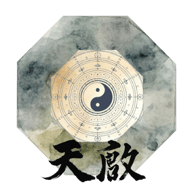
Hexagram 11 (泰, Tài) is one of the 64 classical I Ching hexagrams. Wilhelm’s English translation renders the hexagram’s name as “Peace”. This page describes how classical commentary reads this hexagram when received in answer to a health question.
“Peace. The small departs, the great approaches. Good fortune. Success.”
— classical judgment text
“Heaven and earth unite: the image of Peace. Thus the ruler divides and completes the course of heaven and earth, and so aids the people.”
— classical image text
The hexagram’s general theme
Heaven and earth united — the rare moment when the small departs and the great approaches. Peak harmony, but the seeds of decline sit at the top line.
Classical keywords: peace, harmony, favorable conditions, yin-yang union, prosperity.
泰 Tài read for health questions
Classical I Ching commentary reads health questions through the hexagram’s register of vitality, balance, and the body’s relationship with its environment. The hexagram describes the field of forces around the health question; classical doctrine reads whether the moment favours active intervention, restorative rest, professional consultation, or acceptance and adaptation. Note: the I Ching reading is interpretive, not medical — serious health concerns require qualified medical advice.
The hexagram’s register does not have explicit health-domain resonances in its modern interpretive keys, but applies to health questions through its general theme described above.
Classical guidance for the hexagram: Operate freely while peace lasts. Keep one eye on the top line — the wall returning to the moat — and know when to consolidate.
Read against a health question, this guidance describes the field of forces around the hexagram’s register of vitality, balance, and the body’s relationship with its environment. the hexagram describes the field of forces around the health question; classical doctrine reads whether the moment favours active intervention, restorative rest, professional consultation, or acceptance and adaptation. note: the i ching reading is interpretive, not medical — serious health concerns require qualified medical advice.. The action the guidance suggests — or warns against — applies to the health question being asked, with the chart-specific qualifications that consultation provides.
Configuration
- Hexagram: #11 泰 (Tài), “Peace”
- Question type: Health (健康)
- Question domain: Health questions, medical decisions, recovery, lifestyle factors, the body’s underlying register
- Upper trigram: kun · Lower trigram: qian
- Hexagram lines (top to bottom):
000111(1 = yang / solid, 0 = yin / broken)
Why a generic hexagram-for-health interpretation falls short
This page describes what classical commentary reads when Hexagram 11 is received for a health question — the hexagram’s general register applied to the health domain. But a complete I Ching reading for a specific question requires the casting method (yarrow vs three-coin), identification of changing lines, the resulting secondary hexagram, and integration with the querent’s specific BaZi chart. Without those, the reading is reference-level — the broad register, not the chart-specific application. For chart-aware reading on a specific health question, book a BaZi consultation. The four-pillar chart identifies the elemental balance the body needs, layered with the I Ching reading for timing-aware health diagnostics. Note: this is interpretive reading, not medical advice.