Everyone has been on my blog long enough to know there’s an apparent dichotomy in the quality and balance of BaZi charts. It’s why some people are high-functioning, whereas others aren’t and can barely get their act together.
A key step in BaZi analysis is identifying the “Useful God” (用神) for the BaZi chart. Get this step wrong, and the entire chart analysis will also be wrong. What the “Useful God” is or isn’t will change the meaning of all the elements, as well as the “Ten Gods” (十神).
When we’ve identified the Useful God, we want it to be strong and undisturbed. This is the most critical element that’s supposed to balance the chart, so naturally, we’ll want it to be strong. All high-quality BaZi charts will have this trait.
What is “Formed Structured” (成格)?
A high-quality chart is called a “Formed Structure” (Cheng Ge), meaning the energy flows smoothly to a useful outcome. There are a few famous ones that are quite commonly seen, but let’s just start with one:
Direct Officer Bearing a Seal” (正官佩印)
The parameters
- Direct Officer (Metal): Represents status, law, discipline, and authority. However, on its own, it controls the Day Master (Wood) and can be too harsh or restrictive.
- Resource/Seal (Water): Represents education, noble people, protection, and patience.
- The Flow: Instead of the Officer attacking the Day Master directly, the Officer generates the Resource (Metal creates Water), and the Resource nourishes the Day Master (Water creates Wood).
Why Direct Officer Bearing a Seal” (正官佩印) Is A Formed Structure
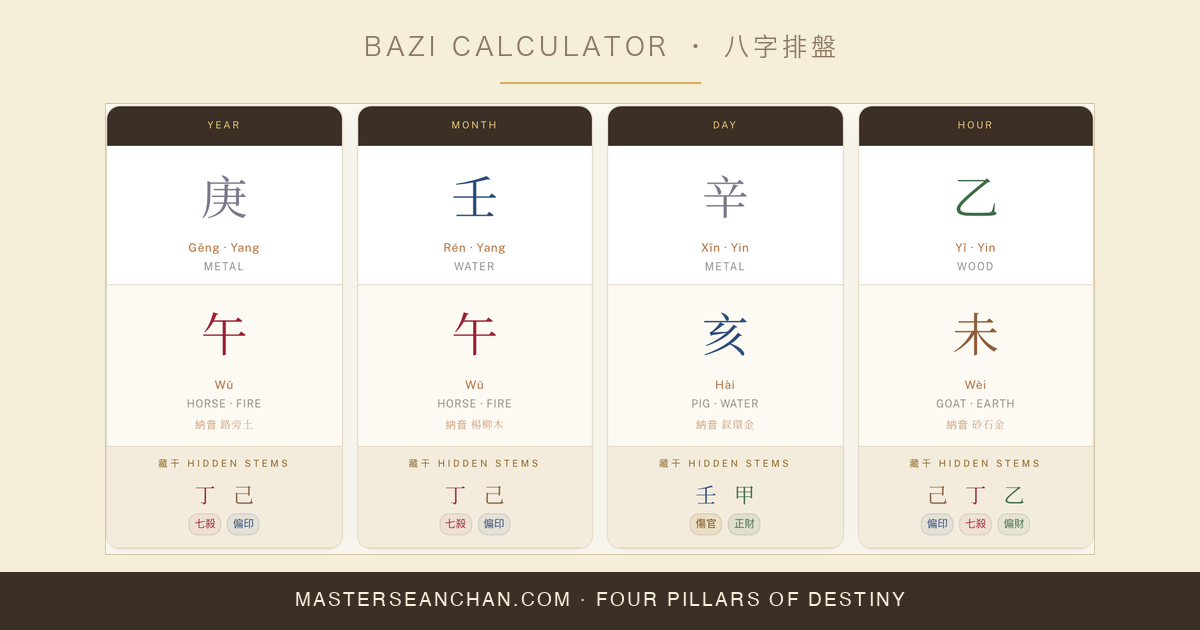
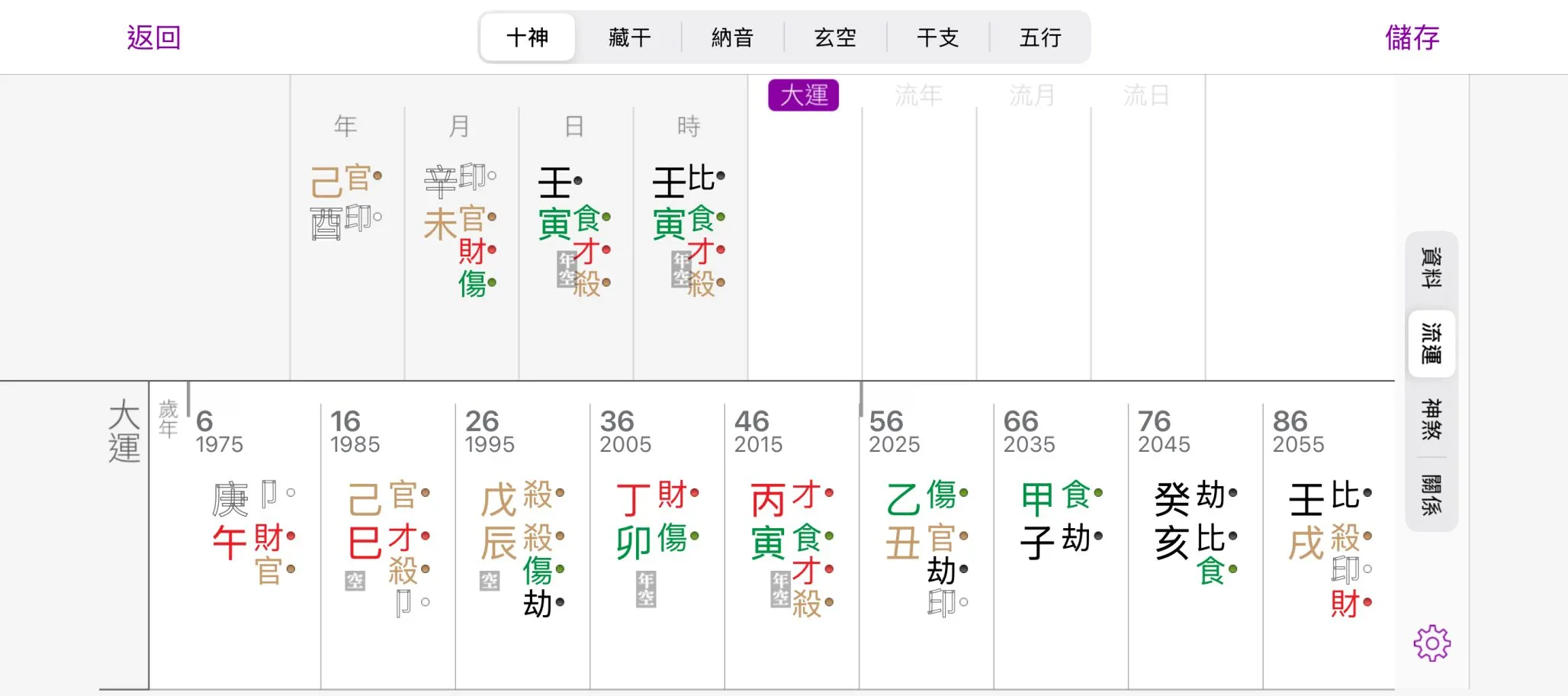
Identifying a “Formed Structure” simply means understanding the flow of elements within a chart. Remember, the elements are expressed through the 10 Gods. In the above example:
1. The Useful God is in Command
The Chart is born in the 未 (wei) Goat month. The main Qi in the Goat month is Yi Earth 己, which is the Direct Officer for the Yang Water (壬) Day master. The structure is established around this Officer star.
2. The “Break” is Prevented (Protection)
A major threat to a Direct Officer structure is the “Hurting Officer” (Output) because it clashes with authority. However, in this chart, the Xin Metal (Resource) is revealed in the Month Stem, sitting right on top of the Month Branch. If a Wood element (Hurting Officer) tries to attack the Earth (Officer), the Metal (Resource) will control it. The Resource acts as a bodyguard for the Officer.
3. The Flow is Continuous (相生 Sheng Cycle)
This is the hallmark of a formed structure. The energy does not stagnate or fight; it flows:
- Earth (Year Stem) => generates Metal
- Metal (Month Stem) => nourishes Water (Damaster)
- Water (Daymaster) => generates Wood (Output)
4. The Outcome
Because the flow goes from Authority => Wisdom => Self => Output:
- Status: The person gains authority naturally (Officer).
- Reputation: They are seen as learned, benevolent, and legitimate (Resource).
- Execution: They can express their ideas and perform (Eating God in the Hour) without ruining their reputation, because the Day Master is strong enough to handle it.
What Is A Broken Structure (破格)?
There are situations in which the Useful God is not only weak but also being harmed. In Chinese, we call it 破格 (pò gé), or a chart with a “Broken Structure”. Imagine the Useful God being the lynchpin or foundation for the chart: if the lynchpin is removed, everything collapses – the flow is interrupted, causing the person to face significant obstacles, internal conflict, or an inability to fully utilise their talents.
A “Broken Structure” is perhaps the most unfortunate trait to have in one’s BaZi chart, and the fact that one has a “Broken Structure” also means the definition of the “Useful God” now needs to change. The true Useful God will now be the one who protects the original Useful God. Identifying Broken Structures doesn’t require you to memorise any of the names of the structures because they are simply the interplay between the elements and the Ten Gods. Understand the 5 Elements & Ten Gods well enough, and you’ll easily identify a broken structure.
This technical post introduces some of the more common Broken Structures in BaZi.
7-Killings Overpowering Body: (七杀攻身)
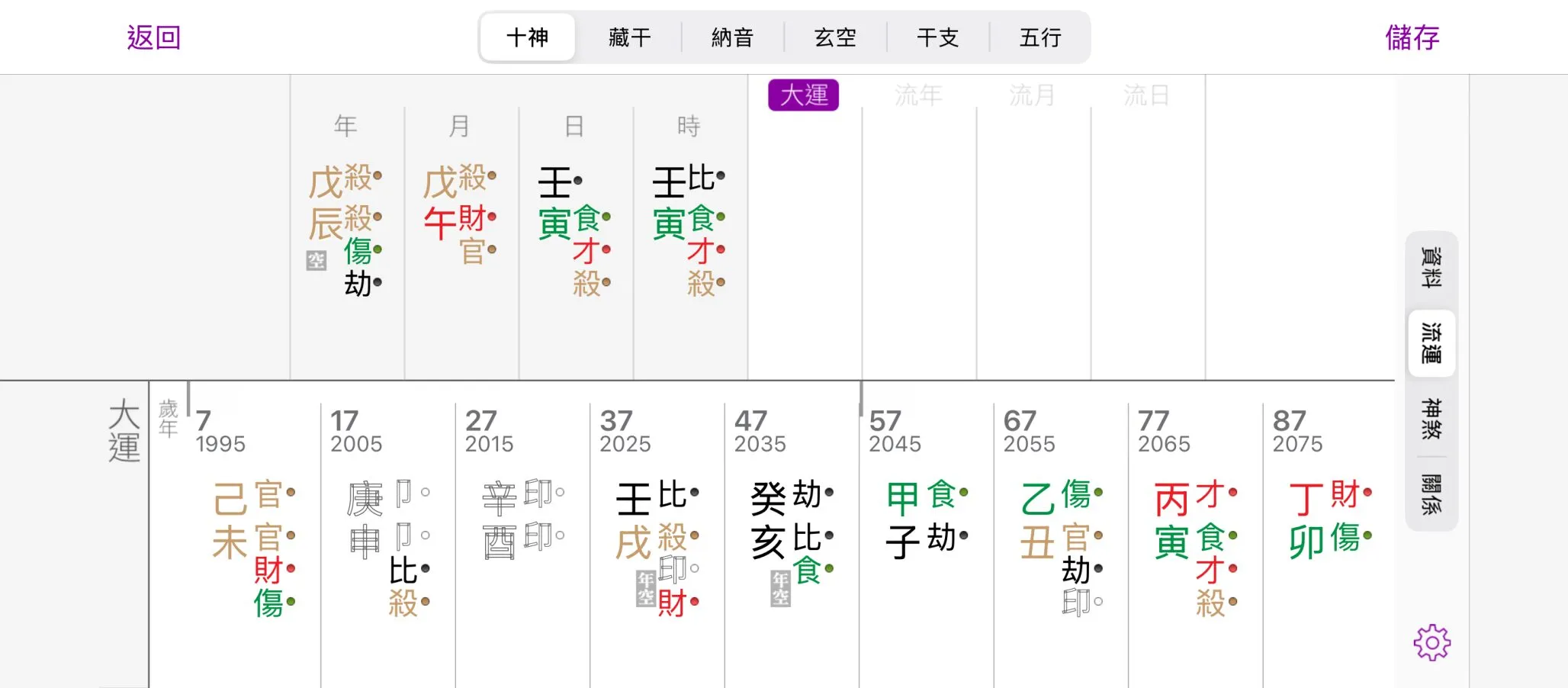
One of the most easily interpretable broken structures is 7-Killings overpowering one’s Daymaster. We call it 七杀攻身, directly translating to “7-Killings harming the body”. ‘Qi-Sha’, or 七杀 in Chinese, refers to the element that controls (克) your Daymaster and shares the same polarity. 7-Killings are only a problem when a Daymaster is weak. Statistically, most Daymasters in charts are considered weak, making this a widespread issue in people’s charts.
It’s not so much a matter of one’s Useful God being harmed but more of one’s Daymaster being utterly exposed and unprotected. 7-Killings can manifest as enemies, stress, and sickness. A strong Daymaster is not worried about 7-Killings.
When 7-Killings appears in a weak Daymaster chart, we want a few things to happen:
- 7-Killings must be ‘converted’ using Resource. We call this 印绶化煞。
- 7-Killings must be ‘converted’ using Output. We call this 食伤制煞。
- 7-Killings must be ‘absorbed’ using a Stem. We call this 劫财合杀。
The three ways above can remedy 7-Killings so it doesn’t harm a weak Daymaster. Following this logic, a broken structure can also mean the above three attributes are negated or rendered useless. Let’s explore further.
Greed for Wealth Breaks Resource (Wealth Clashing With Resource): 贪财坏印
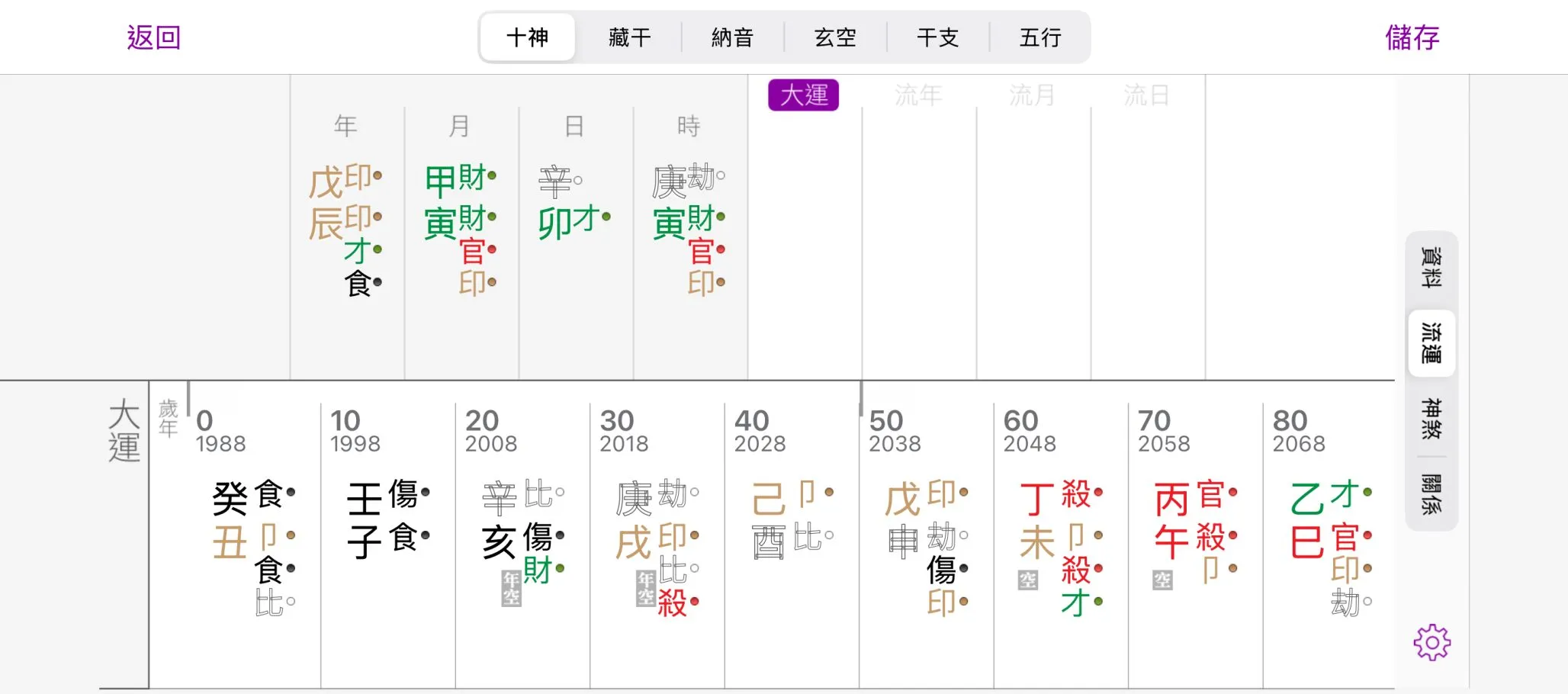
In charts where the Resource ‘god’ acts as the Useful God, encountering the Wealth Element would be the biggest taboo. Basic BaZi theory tells you that the Wealth Element ‘controls’ the Resource Element. The technical term for this in Chinese is called 「贪财坏印」, and it describes a dynamic whereby someone forgoes their title and honour for the sake of money, which is why 「贪财」is used, meaning “greed for money”.
In a case where Resource is required to protect the Daymaster from a strong 7-Killings, encountering the Wealth Element is considered calamitous because the Wealth Element weakens Resource and strengthens 7-Killings. This is a classic example of a Broken Structure involving the Wealth Element (财) clashing with the Resource Element (印绶) and causing a collapse in the chart structure.
The same logic can be applied to the other two cases involving remedying 7-Killings.
Hurting Officer Sees Direct Officer: 伤官见官
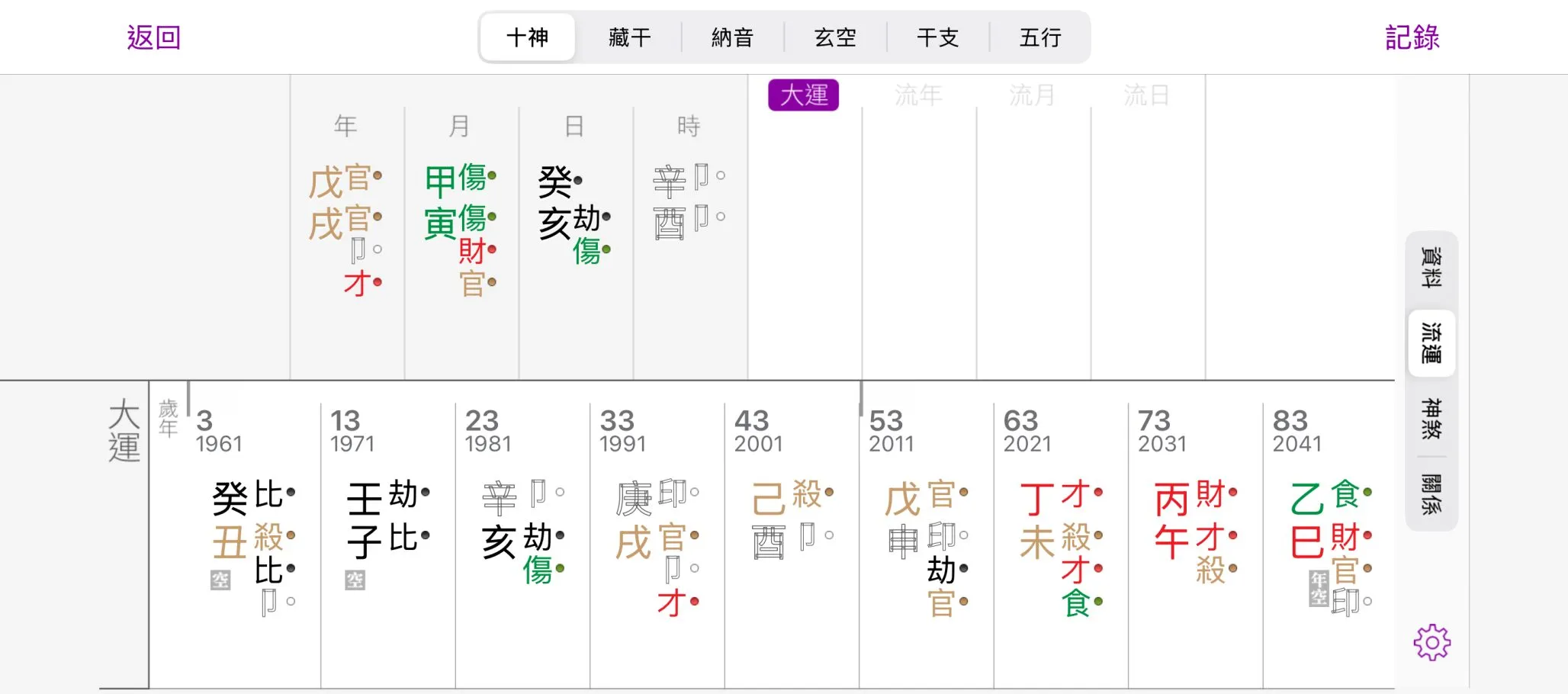
The case of Hurting Officer Clashing with Direct Officer is called 伤官见官 in Chinese.
This is a huge taboo when a Direct Officer (正官) is a beneficial element and is supposed to play the role of the Useful God. A common manifestation of such a structure would be getting into trouble with the law or authority figures, which naturally stems from a character flaw or lack of moral compass. Direct Officer represents someone’s morality and restraint after all, so to have this ‘god’ being harmed means the chart-holder will be an antithesis of these traits.
If this broken structure appears in a female chart, it would be considered a Spouse Harming BaZi chart because Direct Officer represents the husband.
There are some special scenarios where Hurting Officer encountering Direct Officer is considered alright things, such as when Water encounters Fire – but note that these are special cases.
Peer/Rob Wealth Clashing Direct/Indirect Wealth: 比劫夺财
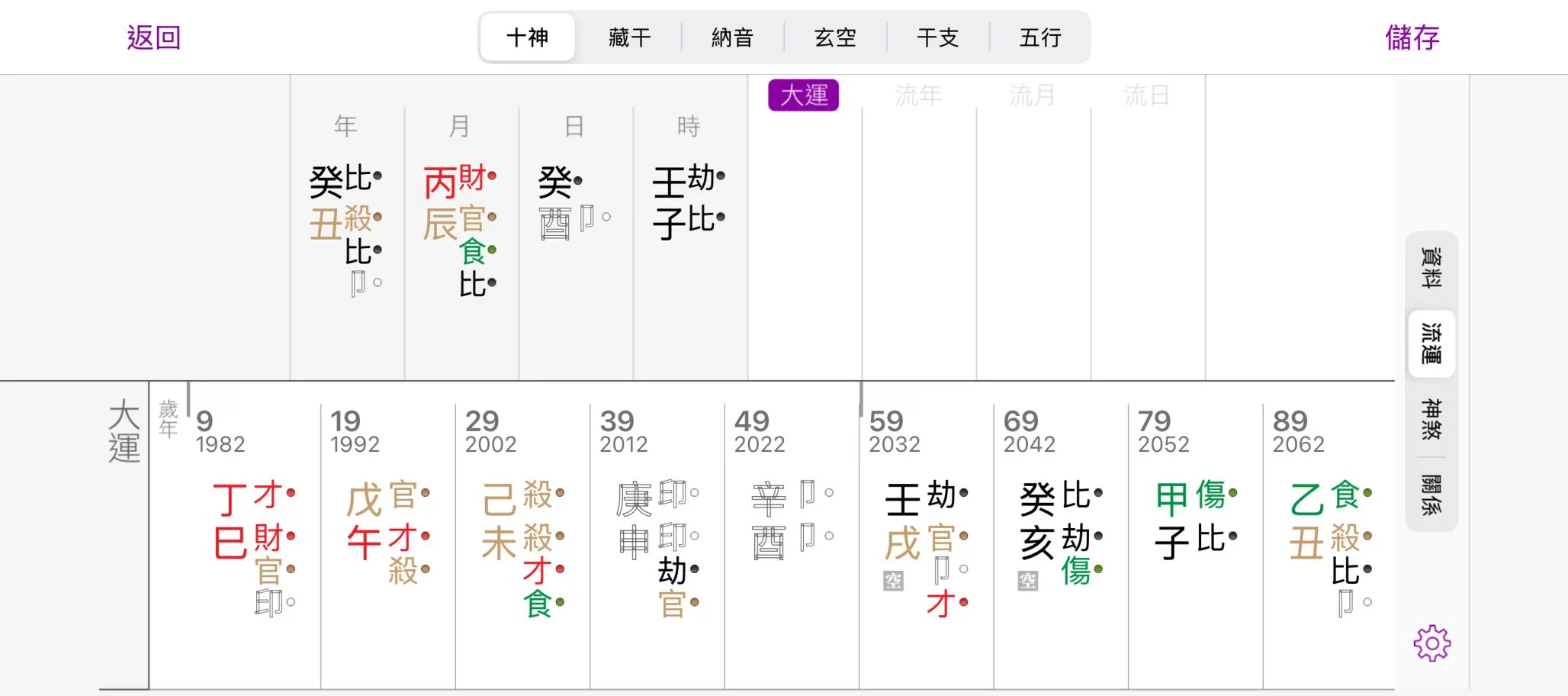
The Wealth Element is welcomed when the Daymaster is strong because it means the chart-holder has enough life force, drive, and energy to pursue wealth instead of being burned by it.
Peer or Rob Wealth harming Wealth accurately is akin to the relentless and mindless pursuit of wealth, often getting people into trouble.
If a Daymaster is strong, we intuitively know the chart no longer needs to encounter Peer or Rob Wealth because these two ‘gods’ further strengthen one’s Daymaster. When Peer or Rob Wealth shows up as negative ‘gods’, they manifest as enemies, competitors, and the chart-holder holding a more self-centred approach to life.
Peer or Rob Wealth harming the Wealth element is considered more inauspicious than having a weak Daymaster and strong Wealth Element because the former often results in a more tumultuous life. In the case of male charts, it’s also considered very spouse-harming because the Wealth element represents someone’s wife.
Owl God Steals Food/Indirect Resource Harming Eating God: 枭神夺食
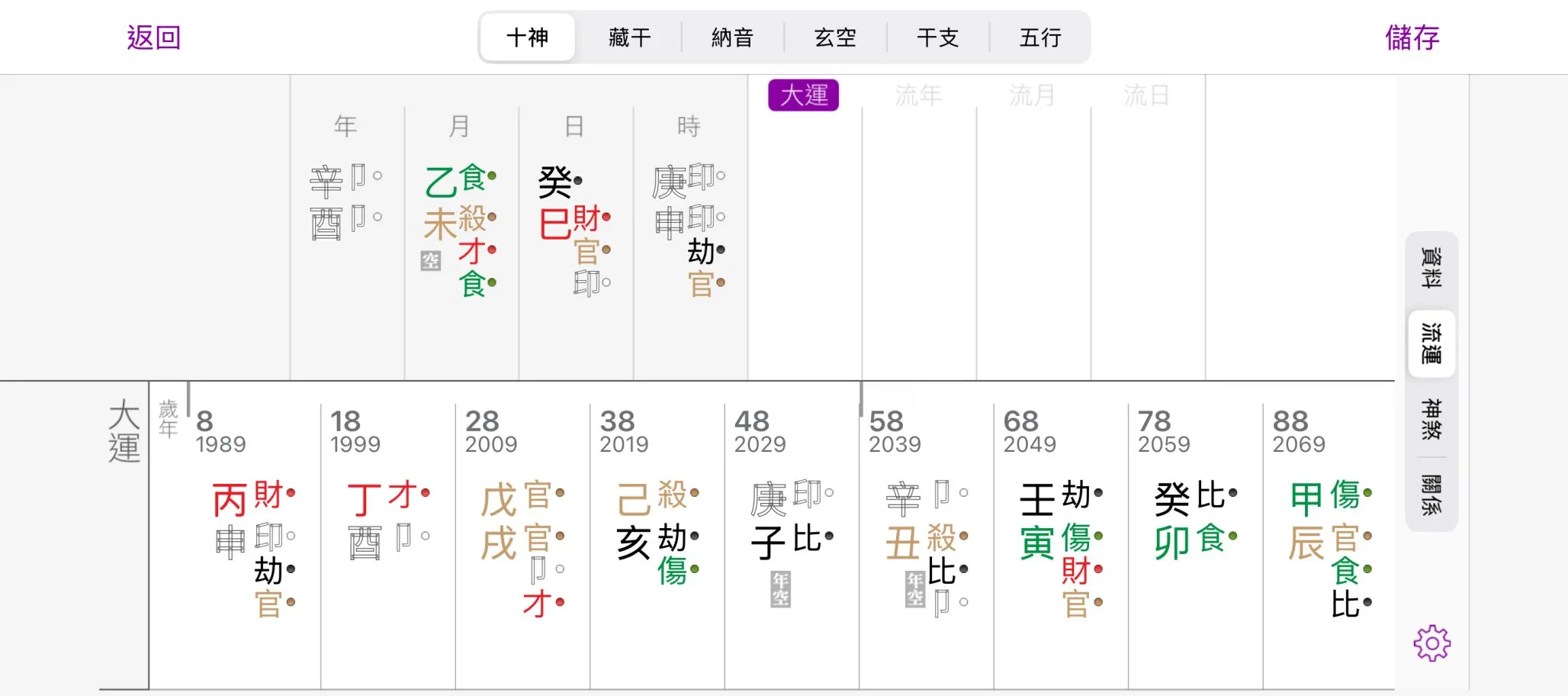
This Broken Structure falls under the umbrella of Resource ‘gods’ harming Output ‘gods’, but special mention needs to go to Indirect Resource harming Eating God. It’s so special that I’ve dedicated a blog post to it before.
Indirect Resource harming Eating God is called 枭神夺食。枭神 (xiāo shén) is the negative term we use when Indirect Resource is negative in one’s chart, and 夺食 comes into the picture when Eating God is being harmed. 夺食 refers to “Eating God being taken away”.
Eating God is considered one of the four auspicious ‘gods’ in BaZi, with Direct Officer, Wealth, and Resource being the other three. To have a positively placed Eating God in your BaZi chart is a huge blessing. It represents abundance and the source of someone’s wealth, after all. If the Wealth Element happens to be a positive element in your chart, Eating God will take the chart quality up another level.
We definitely don’t want Eating God to come under harm, knowing all the positive things that Eating God can represent, which is why Indirect Resource Harming Eating God is probably one of the most feared Broken Structures in BaZi, right next to Hurting Officer harming Direct Officer.
You’ll realise that a Broken Structure arises when the original Useful God of the chart can no longer be used. The priority now shifts to remedying the broken structure by alleviating the harm to the original Useful God.
If you wish to learn BaZi properly, feel free to join the academy:
Here’s a quick summary broken down into three simple steps:
- Identify the Daymaster, as always.
- Figure out what the “Useful God” is.
- Assess what’s happening to the “Useful God”.
As long as you have a good grasp of the basics, identifying a Broken Structure is not tricky, and you will be able to assess the quality of a BaZi chart accurately soon enough.
– Sean