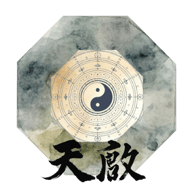
鄒 — Zōu, romanized in Singapore and the Asian diaspora as Cho (Hokkien), Chau (Cantonese), and Cho (Teochew). Cosmologically foundational, revolutionary, and intellectually progressive — the Zou Yan school gives the surname extraordinary philosophical weight. Ranked #56 of the top 100 most common Chinese surnames.
鄒 Zōu: classical context
The character 鄒 was the name of the Zou state, a small Spring and Autumn period polity in modern Shandong, descended from the legendary Yu the Great. The state was eventually absorbed; descendants took 鄒 as their surname. Mencius (孟子) was born in this state.
Configuration
Character:鄒
Mandarin pinyin: Zōu
Stroke count: 13
Primary radical:阝
Classical element classification: metal
Origin region: Shandong
Ranking: #56 of top 100 modern Chinese surnames
Dialect variants for the Asian diaspora
The 鄒 surname is romanized differently across the major Chinese dialects, particularly in the Singapore / Malaysia / Indonesia / Taiwan diaspora context: Hokkien: Cho · Cantonese: Chau · Teochew: Cho · Hakka: Chiu · Hainanese: Cho.
Famous historical bearers
鄒衍 Zou Yan (305–240 BCE) — Warring States cosmologist, founder of the Yin-Yang and Five Phases school
鄒容 Zou Rong (1885–1905) — late Qing revolutionary author of ‘The Revolutionary Army’
鄒韜奮 Zou Taofen (1895–1944) — Republican-era progressive journalist
Clan context
The Fanyang Zou (范陽鄒氏) is the principal classical branch; the Zou state heritage carries the foundational Yin-Yang Five Phases cosmology.
Cultural register of the surname
Cosmologically foundational, revolutionary, and intellectually progressive — the Zou Yan school gives the surname extraordinary philosophical weight.
Categories of consideration when pairing a given name
Classical Chinese name selection considers multiple factors when pairing a given name with the 鄒 (Zōu) surname. The list below describes the categories of consideration at the descriptive level — the actual pairing procedure (which characters to choose for a specific chart) is the chart-aware skill that consultation provides.
Sound flow against the level Zōu tone
Stroke-count balance with the 13-stroke surname
Metal-element register under the 阝 (city) radical classification
Pairing with given-name characters that match the cosmologically-foundational weight
Why a generic name guide is not enough
Researching the surname 鄒 (Zōu) is one input into a complete name selection — not the whole answer. Classical Chinese name selection layers four inputs together; the surname is only the first.
The chart’s missing or imbalanced element. Every name selection begins with reading the recipient’s BaZi chart — identifying the Day Master strength, the Useful God, and which element the chart is short on or over-supplied with. The element to balance is the gating input. Reading it requires a chart-aware consultation; no generic name guide can substitute.
The surname character itself. What this page describes — element classification, stroke count, sound register, dialect variants, and the categories of consideration when pairing a given name with the surname. Useful as classical-cultural reference; not sufficient on its own.
Sound and tonal flow. The way the chosen given-name characters interact with the surname syllable. Tone clashes, awkward homophones (especially in dialect — a name that sounds fine in Mandarin can be embarrassing in Hokkien or Cantonese), and inauspicious sound patterns are filtered at this layer.
Gender, generation, and cultural fit. Male vs female register characters; generational characters (字輩) where the family tradition mandates a fixed middle name; the historical naming traditions of the surname’s clan; and the cultural fit of the chosen name within the family’s heritage and the bearer’s expected life context.
This page describes the second input — the 鄒 surname's classical context and the categories of consideration when pairing it. The reading is a useful starting reference. It is not a substitute for a chart-aware name selection that layers in the other three. Master Sean Chan’s auspicious Chinese name selection reads all four layers against the recipient’s specific chart.
Practical priorities
Note the dialect variants — in the Singapore / Malaysia / Indonesia / Taiwan / Hong Kong context, the 鄒 surname is romanized differently across dialects (Hokkien: Cho · Cantonese: Chau · Teochew: Cho · Hakka: Chiu · Hainanese: Cho). The dialect-variant reading affects sound-flow analysis when pairing given-name characters.
Recognise the surname’s cultural register. Cosmologically foundational, revolutionary, and intellectually progressive — the Zou Yan school gives the surname extraordinary philosophical weight.
Surname research is one input of four. Read the “Why a generic name guide is not enough” section above for the complete name selection calculus that includes the chart’s missing element, sound and tonal flow, and gender / generation context.
Book a chart-aware name selection via auspicious Chinese name selection. The naming consultation reads the recipient’s BaZi chart and selects given-name characters whose element, sound, stroke count, and yin-yang polarity align with the 鄒 surname and the chart together.
Frequently asked questions
What is the origin of the Chinese surname 鄒 (Zōu)?
The character 鄒 was the name of the Zou state, a small Spring and Autumn period polity in modern Shandong, descended from the legendary Yu the Great. The state was eventually absorbed; descendants took 鄒 as their surname. Mencius (孟子) was born in this state. The surname is ranked #56 of the top 100 most common modern Chinese surnames and cosmologically foundational, revolutionary, and intellectually progressive — the zou yan school gives the surname extraordinary philosophical weight.
How is the surname 鄒 romanized across Chinese dialects?
鄒 is the same character across all Chinese dialects, but its romanization varies. In Mandarin: Zōu. In Hokkien (common in Singapore, Penang, Taiwan): Cho. In Cantonese (common in Hong Kong, Guangzhou): Chau. In Teochew: Cho. In Hakka: Chiu. The same family, the same surname character, often appears with different English-letter spellings within the same diaspora community.
Can I select a Chinese name for my child based on this surname page alone?
No. This page describes the second of four inputs into a complete name selection. The other three inputs — the recipient’s BaZi chart, sound and tonal flow analysis, and gender / generational considerations — require chart-aware reading that this reference page deliberately does not provide. Use the page to recognise the surname’s classical context; book an auspicious Chinese name selection for an actual name.
AUSPICIOUS CHINESE NAME SELECTION
Get a chart-aware name selected for your child, your business, or yourself.
Master Sean Chan’s auspicious Chinese name selection reads the recipient’s full BaZi chart, identifies the elemental balance the chart needs, and selects given-name characters whose element, sound, stroke count, and yin-yang polarity all align with the surname and the chart together. Zero generic name guides — every name is chart-specific.
Read the chart first — the prerequisite for any name selection.
Name selection requires reading the chart first. Master Sean Chan’s BaZi consultation identifies the Day Master strength, the Useful God, and the elemental balance needed — the gating inputs for any chart-aware name selection.
Not one system, but three. Tian Qi reads your chart across BaZi, Zi Wei Dou Shu, and Qi Men Dun Jia at once, then cross-checks every engine, so your answer is verified and layered. Master-level clarity in minutes.
A true tri-engine mind that checks its own analysis across all three systems
Your BaZi Four Pillars decoded: day master, ten gods, and the forces shaping your life
Zi Wei read palace by palace, and Qi Men to time your biggest decisions
One AI reading your chart across BaZi, Zi Wei Dou Shu, and Qi Men Dun Jia at once. Master-level clarity in minutes.