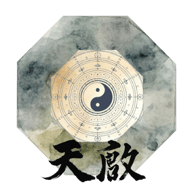
The configuration applies when the chart-holder’s day stem activates Hua Lu (化祿) on a star that occupies the Self palace (命宮). The activated star itself varies by day stem — for example, Jia stem activates Hua Lu on Lian Zhen; Yi activates it on Tian Ji; Bing activates it on Tian Tong; and so on across the 10 stems. Whichever star is activated, when it sits in the Self palace, the configuration described here applies. The palace also sits opposite the Travel palace (遷移宮) on the Self–Travel (命遷線) — classical practice always reads the two palaces together.
Practitioner reading: Hua Lu landing in the Self palace tends to produce the chart-holder whose personality itself attracts opportunity — people gravitate, doors open without much pushing. The activated star’s register becomes the chart-holder’s defining beneficial trait. Often produces likeable, opportunity-magnet personalities.
At textbook level, the configuration concentrates favourable circulation into this life domain — the area where opportunity, recognition, or beneficial energy reliably gathers. The exact reading depends on which star receives the transformation in your day-stem column (different chart-holders see different stars activated here). Either way, the activated palace becomes a primary domain in any chart reading: it features in the favourable-cycle forecasts and re-fires whenever the chart-holder’s 10-year or annual luck stem matches the natal stem.
Practitioners reading at depth weigh four further layers that this reference does not develop: which Main Star is actually receiving Hua Lu for the chart-holder’s day stem, what other stars share or oppose the Self palace, whether self-transformations (自化) on adjacent palaces alter the configuration’s expression, and how the current 10-year and annual luck cycles re-activate or quiet the configuration. Synthesising these layers across a real chart is the practitioner skill the Zi Wei Dou Shu Masterclass teaches.