Table of contents
Peach Blossom, also known as 'Tao Hua' (桃花), is typically used to gauge an individual's affinity for the opposite sex, attractiveness, and the likelihood of romance. Peach Blossom is expressed differently across various Chinese astrology techniques. BaZi sometimes refers to it as the "Peach Blossom Star" or the "Peach Blossom Auxiliary God (神煞)". Sometimes, it refers to the four cardinal Branches. Zi Wei Dou Shu refers to these phenomena as "star". No matter what they're called, let's just assume they refer to the same thing.
Having Peach Blossom 'luck' is arguably something everyone would like to have on their charts. It makes life a little more interesting because who wouldn't want to be a bit more popular with the opposite gender? It's a natural human desire that adds flavour and excitement to our lives, and there's nothing to be ashamed of.
That said, not all Peach Blossoms are deemed favourable. When a chart shows signs of excessive Peach Blossoms or Peach Blossoms that are unhealthy, it often leads to unwanted circumstances and unnecessary drama.
Most BaZi hobbyists have an extremely superficial understanding of Peach Blossom because most of the information they receive comes from the internet, especially English-language sources that only skim the surface. Peach Blossom in Chinese metaphysics has different types and forms, and it is also influenced by the season of birth, as the season alters the state of the chart.
This blog post won't go into every nitty-gritty detail of Peach Blossoms. Still, it'll touch on some basics and things that are often missed, so that you don't make the mistake of assuming having Peach Blossoms equates to a stable and fulfilling marriage. The axiom of "balance in everything applies here too" - too many Peach Blossoms is not a good thing.
Where Does Peach Blossom Appear In The BaZi Chart?
Peach Blossom will always appear on the 四正 Branches, which refer to 子 (zi), 午 (wu), 卯 (mao), and 酉 (you). These Branches represent Peach Blossom, but looking at them alone does not tell you what kind of Peach Blossom they are.
Exactly which of these four Branches affects the chart-holder is determined by the Branches that appear in the chart, and it's expressed through a straightforward formula:
- 寅 (yin),午 (wu),戌 (xu): 卯 (mao) represents your Peach Blossom.
- 申 (shen), 子 (zi), 辰 (chen): 酉 (you) represents your Peach Blossom.:
- 亥 (hai),卯 (mao),未 (wei): 子 (zi) represents your Peach Blossom.
- 巳 (si),酉 (you),丑 (chou): 午 (wu) represents your Peach Blossom.
Since not everyone is a practitioner, let's mark down the language:
How to Find Your Peach Blossom Animal
Check your Year or Day Branch (Animal):
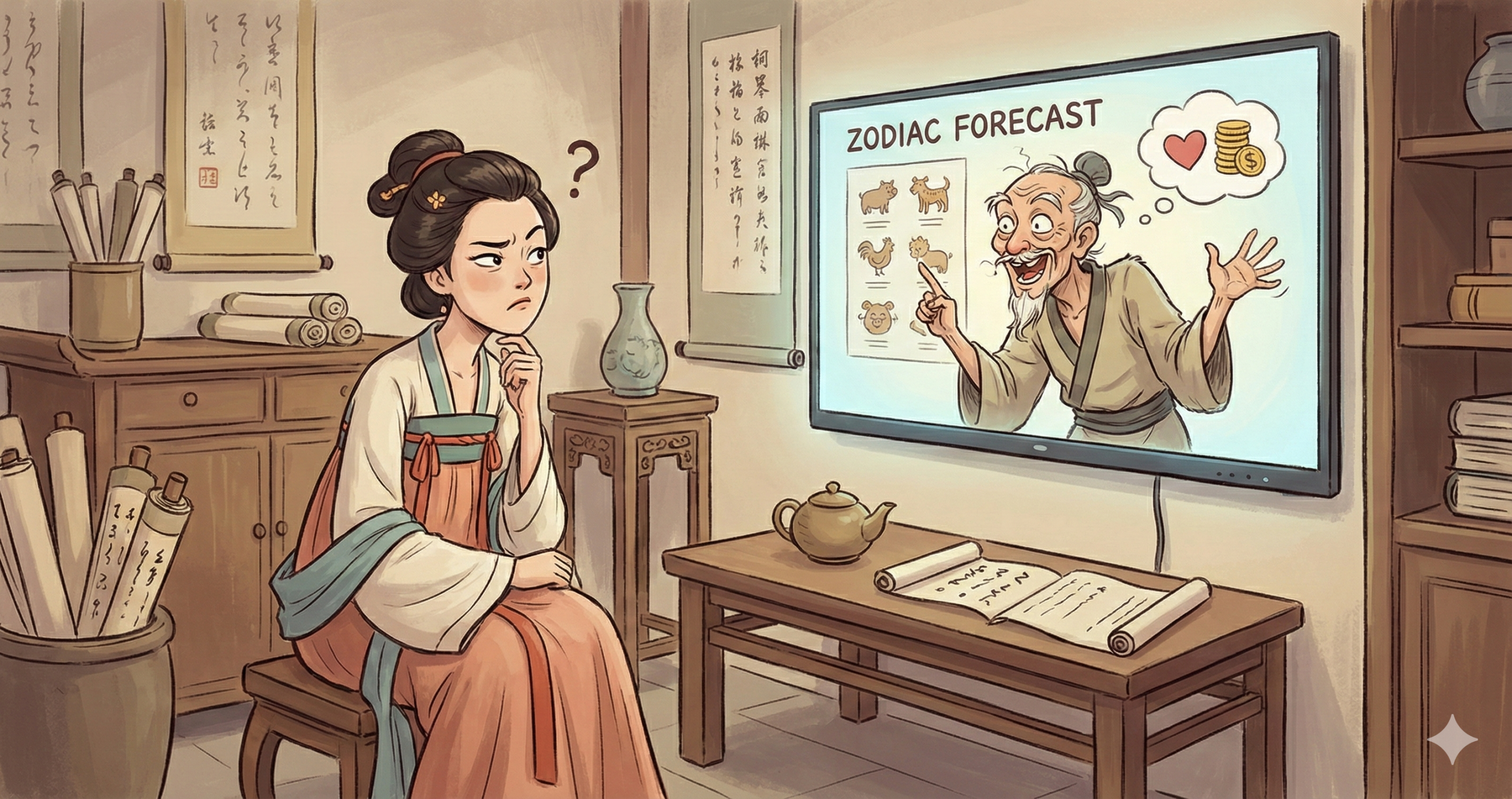
- 🐯 Tiger, 🐎 Horse, 🐶 Dog → Your Peach Blossom is Rabbit (Mao).
- 🐵 Monkey, 🐭 Rat, 🐲 Dragon → Your Peach Blossom is Rooster (You).
- 🐷 Pig, 🐰 Rabbit, 🐐 Goat → Your Peach Blossom is Rat (Zi).
- 🐍 Snake, 🐔 Rooster, 🐮 Ox → Your Peach Blossom is Horse (Wu).
The basic formula above is to identify where the Peach Blossom 'god' would appear in your chart.
Suppose you're the type who likes to delve deeper into theory. In that case, the reason why 子午卯酉 are the positions that represent Peach Blossom is that these four positions are the positions where Yin and Yang intersect, which naturally represent male and female coming together. After all, we all know Yang represents male, and Yin represents female. Yin and Yang intersecting is a natural phenomenon and can be observed via the weather, and human life will parallel this process.
Please don't jump to the conclusion, thinking it's that simple to use the above four lines of the formula to determine the outcome of our relationships. There are different forms of Peach Blossoms, and the outcome can be very different depending on where and with what they appear.
Lastly, please don't assume that just because you won't get married, these Branches don't appear in your natal chart. There are still your Elemental Phases and Annual Phases to look at.
Different Types Of Peach Blossom
In BaZi, there are different kinds of Peach Blossoms, and their characteristics will differ. To list some of the more well-known ones we use in BaZi analysis, some of the Peach Blossom terms you'll often hear about would be:
- 正桃花: The vanilla and most generic way of addressing Peach Blossom, representing stable, positive romantic relationships.
- 墙内桃花: 'Peach Blossom within the walls', which often refers to romance within the confines of one's home, naturally representing your spouse and a stable marriage.
- 墙外桃花: 'Peach Blossom outside the walls', which refers to a romantic partner outside of one's home, often representing an affair or trysts outside.
- 沐浴桃花/裸形桃花: Referring to the unstable relationships that are more physically motivated, as though someone is going through puberty and 'suffering' from raging hormones. A special condition needs to be met for this to appear.
- 红鸾: This is the star that refers to one's 正缘, meaning a positive and fulfilling relationship.
- 天喜: Very similar to 红鸾 but with some subtle differences. It refers more to events rather than the relationship and includes the birth of a child.
- 咸池: Also often called 败神 because it can lead to the downfall of someone. Represents lust, alcohol, and indulgence in them. This star is frowned upon in feudalistic times but less so in modern times.
- 红艳: Refers to the more emotional kind of Peach Blossom rather than the physical kind of Peach Blossom. The motivations are emotional instead of physical.
- 天姚: Represents someone's attractiveness and allure. Think Gal Gadot.
There is a formula for how and when each of the above Peach Blossoms will appear, but I will not go into that now, as most BaZi calculators will do so.
As you can see, Peach Blossom has many forms: some are considered positive and represent what we all long for, namely, a stable and fulfilling relationship/marriage. The negative forms of Peach Blossom often get people into trouble, toxic relationships, and sometimes even illnesses (you know what I'm referring to).
Understanding the different forms of Peach Blossoms also helps us identify which relationship charts are at risk and which are likely to end in a stable marriage. Where the Peach Blossom appears also matters, so please don't assume that Peach Blossom appearing on the Year Pillar is the same as it appearing on the Hour Pillar.
When Peach Blossoms Go Haywire
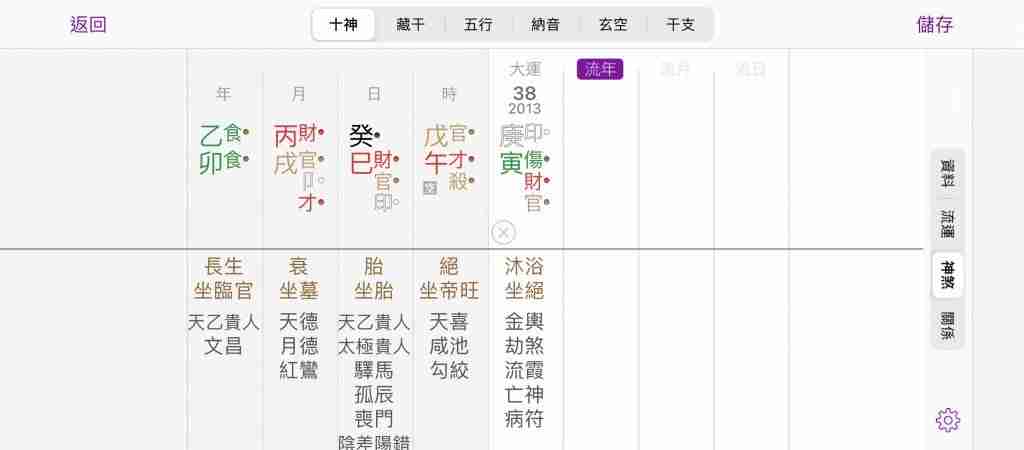
I will not go into the real-life details, but the above chart belongs to a female with a love life that can only be described as twisted and unhealthy, even by modern-day standards. Just think of multiple partners and jumping from one to another, regardless of their age and marital status.The above chart-holder was previously married but has since separated. To my knowledge, she is still in and out of relationships even at 46, and the relationships she gets into can only be described as 'unimaginable' without sounding too judgmental.
It is not intended to be a chart for a stable marriage. The chart is already a very weak chart because of how imbalanced it is and the weak Elemental Phases it goes through, but much of the drama in this chart-holder's life concerns romance and relationships. It's just that the already weak chart exacerbates things, and it's not meant to be a chart with any significant achievements.
Here are the things you can immediately see:
- If we take the Day Pillar as a reference, her Peach Blossom is in her Hour Branch of 午 Fire. Her Hour Pillar also happens to be part of her chart, where her Spouse Element of Yang Earth (戊土正官) appears.
- Now, what's important to point out here is that this Peach Blossom of hers falls under 墙外桃花 (Peach Blossom Outside The Walls), and it is also her 咸池 position. Simply put, this chart is very likely to have extra-marital affairs and seek relationships outside the boundaries of her home, and it has already happened multiple times.
- What's worth noting is that her Spouse Element forms something we call 戊癸合, which is also 无情之合 in BaZi, so relationships tend to appear fine on the outside, but behind closed doors, the couple can be like enemies and be in constant conflict. Please note that the combinations of Heavenly Stems have distinct meanings and manifestations; not all are the same.
- Some readers or hobbyists might point out that her Hour Pillar is also where her Void Emptiness (空亡) appears, and may assume that it represents her relationships or affairs aren't real and will disappear. I won't go into the topic of Void Emptiness for now, but this concept of Void Emptiness doesn't always mean that something completely disappears. Void Emptiness can also be differentiated into real and false versions of Void Emptiness, and it can even be removed at certain times.
- In this chart-holder's case, Void Emptiness doesn't mean that no relationships or romantic encounters will appear; rather, they are fleeting and don't lead to anything formal. Depending on how you look at it, it can be both good and bad because any formalisation of the relationship (meaning marriage) will end up nowhere, so you might as well keep it fleeting.
If you noticed, I've included her current 10-year Elemental Phase in the above chart. I did so because her current 10-year phase triggers all the Peach Blossom points in her chart, so her love life is undergoing some dramatic, albeit unhealthy, changes. Let me explain:
- She is in her 庚寅 10-year phase, and you might wonder why this is significant.
- First, 寅 here denotes her 癸 Water Daymaster's 沐浴 position. 沐浴 can also represent Peach Blossoms, and you can see it as an element undergoing a 'puberty' phase of growth. 沐浴 comes right after 长生, after all.
- The 寅 Branch here triggers 寅午戌三合火局, thereby activating the Peach Blossom position of 午. Romance will surely happen, but it will not necessarily lead to marriage.
- Now, let us turn our attention back to 卯 Wood on her Year Branch. Why? Because 卯 Wood here is the Peach Blossom position for 寅, 午,戌, and 卯 here represents her partner's Peach Blossom. This means that whilst she has a lot going on in her love life, her potential partner's love life will be just as 'exciting'. Not yet, but soon.
To put it in layman's terms, both the chart-holder and her partner are going to be drifting all over the place when it comes to relationships, and things will likely blow up in 2023 when we reach the year of 卯, which is likely the year where her partner finds someone new. 2023 is also a 癸卯 year: there is an additional 癸 Water here fighting to absorb her Spouse Element of 戊 Earth away. What makes things even more salient is that 卯 is the 沐浴 position of 戊 Earth, which is her Spouse Element, so not only is the 卯 Wood in her Year Branch trigger, but her Spouse Element will also go through a 'pubescent year' and will have a year filled with Peach Blossoms.
I assure you that something will happen in 2023. There will be drama.
As I always say, although BaZi provides eight characters to begin with, the wealth of information it contains is immense, because even the simplest laws can give rise to emergent properties that generate the complexities we encounter in our lives.
If you're interested in BaZi and wish to study, understand, and put it to use yourself, please head over to the academy and consider signing up for one of the courses:

For more blog posts on marriage and relationships, I suggest you start here: Spouses Who Bring ‘Good Luck’ – A Chinese Metaphysics Perspective